Tag Archives: Top News

MALTA, INFORMAL SUMMIT OF EU MINISTERS FOR THE INTERIOR

The proposal of the Maltese Presidency of the European Council on the urgency of reaching an agreement with Libya on the migration crisis has found a new setback as the European Commissioner for Migration and Interior Dimitris Avromopoulos stated that a deal between the European Union and Libya on the same lines as that reached with Turkey last year is impossible.

The tough declaration was made during a press conference held today in the Maltese capital at the end of the informal summit of the Ministers of Home Affairs of the European Union. He affirmed that both the European Commission and the European Council of Ministers of the Member States are in accordance over this issue.

At the official inauguration of the Maltese Presidency held a couple of days ago, the Maltese Prime Minister Joseph Muscat spoke about the urgency of an arrangement with neighbouring Libya, an agreement that should be similar to that reached between the European Union and Turkey.

However, following talks held in Malta between Avromopoulos and the Maltese Minister for Home Affairs and National Security, Carmelo Abela, the Commissioner whilst addressing the press conference was clear and direct declaring “Libya is not Turkey. There can never be a replica of the deal made with Turkey for Libya”.

(ITALPRESS/MNA).


Source: medNews

"GIVE LIVE VIDEO TECHNOLOGY A CHANCE"

The international former referee, Italian Pierluigi Collina declared that the introduction of video technology as assistance to referees during the football game is indeed a good experiment. “It would eliminate obvious errors of judgment and as a result give more credibility to the game.” Meanwhile he also stated that UEFA considers the introduction of additional referees as a valuable decision. 

Pierluigi Collina, considered as one of the best international football referees ever was a special guest at The World in 2017 Gala Dinner organized by The Economist and held in Malta this weekend.

FIFA honored Collina six times with the widely held Referee of the year award, he won the award of best Serie A referee for seven times and in 2011 was introduced in the Italian Football Hall of Fame. During his ten year career as referee with FIFA he was selected to arbitrate the final UEFA Champions League in 1999 between Manchester United and Bayern Munich and the UEFA 2004 Cup between Valencia and French Marseille.

Collina stated that today his only regret is that he is older. “I wish I could return to my younger days and restart my career all over again, I would so everything the same but start from the very beginning so at least I would be young once more”, said a smiling Collina.

Collina declared that whilst cherishing his career, he understands the responsibility that goes hand in hand with such success. “I am proud of what I achieved but feel the responsibility of always delivering the best as this is what everyone expects out of you once you reach such high levels otherwise you will be criticised” Collina said.


Source: medNews

MOROCCO, 2016 RECORD YEAR FOR THE CAR MARKET

Car sales in Morocco at the end of 2016 reached 163,110 units, +23.56% compared to last year. This growth was stimulated by commercial offers and zero interest financing offered by all makes. Cars sold for private use were 152,324 (+25.91%). Small commercial vehicles sales diminished by 2.2%, dropping to 10,786 units. The 10 most sold makes on the Moroccan market are: Dacia (42.279 registrations, + 16,37 % compared to 2015), Renault (17,121 units, + 45,82%), Ford (14,502 units, + 40.99%), Peugeot (10,625, + 21.73%), Volkswagen (10,509, + 71.6%), Hyundai (9,412, +17.28%). Fiat is 7th with 8,636 cars sold in Morocco in 2016, with a 8.32% increase. After Fiat, Nissan (6,528 registrations, +21.81%), which had a great success with its crossovers. At the end of the top 10 Citroen (6,449, +25.79%) and Toyota (4,023, + 27.43%).  

(ITALPRESS/MNA).


Source: medNews

TUNISIA, WORLD BANK ESTIMATES GROWTH AT 3% IN 2017

Tunisia is expected to reach a 3% growth rate in 2017, 3.7% in 2018 and 4% in 2019. This is what emerges by the latest report on global economic perspectives published by the World Bank. For last year, the international financial institution had foreseen a growth of real economy of 2.0%, 0.2% more of what forecasted last June. Compared to six months ago, the World Bank expects an additional 0.5% growth for 2017 and an additional 0.7% for 2018.

(ITALPRESS/MNA).


Source: medNews

EU, ADDRESS BY MUSCAT IN STRASBOURG

The Maltese Prime Minister, Joseph Muscat implied without being specific that it is his intention to seize the bull by its horns with the support of the member states in facing two major challenges during the six months of the European Council Presidency. Muscat was referring to the immigration problem and warned Europe that it will yet face a greater crisis in the coming months if immediate action is not taken and to the exit process of the United Kingdom from the European Union as on Tuesday, Britain’s Prime Minister Theresa May listed the political roadmap and what she is aspiring to achieve in the final agreement with the European Union.

Joseph Muscat, former Member of the Parliament himself, was addressing the plenary session of the European Parliament in Strasbourg listing the priorities of the Maltese Presidency. During the assembly the Italian Antonio Tajani assumed his role as the new President of the European Parliament following his triumph in the elections held on Tuesday.

PROPOSED AGREEMENT BETWEEN THE EU AND LIBYA AS INFLUX OF IMMIGRANTS IS EXPECTED

The Maltese Prime Minister said that Malta’s proposal to the European Union to reach an agreement with Libya to curb illegal trafficking of migrants in the Mediterranean is crucial. He stated that another crisis like that of 2016 when the European Union was caught unawares must be avoided at all costs.

Malta is proposing a similar agreement reached last year between the European Union and Turkey. “The agreement is not perfect and is not a long-term solution, but it has indeed made a difference”, said the Maltese Prime Minister. He insisted, “Europe cannot afford to be caught up in this problem once again. In Spring, Europe will definitely face an influx of dangerous crossings in central Mediterranean and the reasons behind these perilous journeys highly differ from those of the Syrian refugees crossing the Aegean Sea”.

The Maltese Prime Minister went even further than this as he recommended that in the eventuality of an agreement with Libya, the European Union must subsequently intervene to assure safe access to those immigrants who have a legitimate right to apply for asylum and break the business model of the criminal gangs raking millions of euros out of this inhumane business.

“If we manage to get such an agreement, we should then as the European Union, organize humanitarian safe passages and corridors, that would get recognized asylum seekers to Europe safely,” pointed out Prime Minister Muscat.

Nevertheless the Maltese Government is aware that an agreement with Libya will not be an easy feat due to the soaring instability there is in this North African country located 1,099 km away from Malta and only 296 km from the Italian island of Lampedusa.

Whilst the Maltese Prime Minister in Strasbourg stressed on the urgency of an agreement between the EU and Libya, the Maltese Minister of Foreign Affairs George Vella addressing local media last week showed he is skeptical due to Libya’s instability, which is unlike the situation in Turkey. As a matter of fact notwithstanding the Turkey’s troubles and predicament it still remains a relatively stable country.

This reasoning was echoed by Philippe Lamberts, the Belgian co-President of the Greens in the European Parliament in today’s session and never presented to the European Parliament for approval but was bypassed and approved by the Council of Ministers of the European Union.

Libya continues to suffer as three different governments wage war against each other as all crave power to control the Libyan territory. 

Moreover the government recognized by the United Nations under the leadership of Fayez Sarraj is weak and defenseless against this instability. In addition to all this unrest the country is plagued with the presence of militia fighters bringing dread to the already hopeless situation.

Despite this grave situation, the Maltese Prime Minister Joseph Muscat is still insisting on the urgency of an immediate agreement with Libya so as to avoid experiencing another crisis like 2016. He suggested that the existing immigration agreement between Italy and Libya should serve as a foundation to extend it to the European Union.

The Italian MEP Fabio Castaldo who declared that the agreement with Turkey was illegal, heavily criticized the proposal by the Maltese Prime Minister. 

Joseph Muscat, the Maltese Prime Minister stated in his official address that he is determined that the Maltese Presidency will work hand in hand with the European Parliament to address the common challenge of immigration.

On the other hand, the Government of Malta has already submitted a proposal for joint patrols with the Libyan naval power in an attempt to stop the influx of immigrants in the Central Mediterranean route.

In an aide-memoire that was presented to the member states of the European Union, Malta is suggesting guard patrols off the Libyan coast led by European countries together with the Libyans. Intercepted migrant boats are to be returned to Libya. However it is still unsure whether it will be the European naval power or the Libyan forces that will assume the responsibility to patrol back to Libya these boats.

With just a couple of days gone in 2017, dozens of desperate souls have already been claimed by the unforgiving sea with only 700 immigrants making it and brought to  Sicily’s shores seeking asylum. Such tragedy has brought once again the Mediterranean route high on Europe’s agenda.

INFERIOR DEAL FROM EU MEMBERSHIP FOR THE UK

Coincidentally the address by the Maltese Prime Minister in Strasbourg took place a day after the British Prime Minister Therese May introduced the political roadmap on which the United Kingdom will be basing its negotiations to exit the European bloc. The Maltese Prime Minister stated that is indeed an ironic situation that in March when Article 50 of the Lisbon Treaty is activated to allow the exit of the United Kingdom from the European Union, it will be Malta an ex-British colony for two centuries but currently running the Presidency of the Council of the European Union that will be leading the negotiations.

The Maltese Prime Minister reiterated that the European Union must reach a fair but inferior agreement with the UK than that guaranteed through full membership. “This should not come as a surprise to anyone otherwise it means they are detached from reality”. Last Tuesday, the British Prime Minister Therese May listed the English government priorities for the negotiations that are yet to start with the European Union and that are expected to take two years. She declared that she is seeking the creation of a new agreement and not a replica of something that is already in existence. She said that it is not possible for her country to remain part of the European common market, explaining that British presence in the common market would mean that the United Kingdom “has not ended its membership with the EU”.

She promised that following the process of Brexit, the United Kingdom would have the “greatest possible access” to the common market. Addressing the rest of the 27 States of the European Union, Therese May declared that the United Kingdom will remain “a faithful friend, partner and an ally that can be relied on”.

Therese May called for a new and equal collaboration with the EU rather than a partial membership that would leave the United Kingdom in an uncertain position.

Whilst addressing the plenary session of the European Parliament, the Maltese Prime Minister took the opportunity to confirm that there is a univocal agreement within the Council of Ministers regarding the free movement of people and access to a common market. “As stated by the 27 Heads of States and Government after the Brexit referendum result, which we respect as a sovereign decision, the freedom of movement of persons, goods, services and capital cannot be decoupled. Put simply, the four freedoms are indivisible. Indeed, the fact that the British Prime Minister declared that she will take her country out of the Single Market because of the political choice to limit freedom of movement of persons, confirms the position of the EU27, that the four freedoms are one package. That in itself is a somewhat positive development”. Negotiations between the UK and the EU are expected to commence once Article 50 of the Lisbon Treaty is initiated by the end of March. The British Prime Minister has made it clear that she has no intention to ‘weaken’ the EU or the common market. Nevertheless, the British Government has so far revealed few details about what it is expecting from the Brexit talks and is holding back from fully revealing what the British government is anticipating stating that this would tamper negotiations with Brussels.

MEETING OF THE HEADS OF STATE AND GOVERNMENT IN MALTA NEXT MONTH 

The Maltese Prime Minister’s key message on illegal immigration at the plenary session of the European Parliament confirms what was said at the official inauguration of the Maltese Presidency – that immediate decisions on how illegal immigration must be confronted must be an absolute priority before another major crisis explodes. Reacting to the remarks made during the plenary session, the Prime Minister Joseph Muscat urged the European Union countries to take decisions now and show solidarity to avoid having to make much harsher decisions. “Unless we are ready to take such bold moves, we would be made to take even bolder ones in the months to come, and these decisions would be led by people who do not have progress of the European project at heart. This is a matter which we intended tackling directly during the meeting of the Heads of State and Government in Malta next month”.

(ITALPRESS/MNA).

Photo credit: Department of Information Malta


Source: medNews

ALITALIA, TALKS WITH AIR MALTA FOR PURCHASE 49% STOPPED

Air Malta and Alitalia have jointly decided to terminate the talks which would have led to Alitalia becoming a 49% shareholder in Malta’s national carrier.

The two airlines agreed that the current changing landscape in the airline industry was not ideal for a such a transaction and that both airlines would concentrate on the current challenges without entering into a partnership.

Air Malta and Alitalia will continue to collaborate closely commercially through a recently launched extensive code-sharing program.

(ITALPRESS/MNA).


Source: medNews

GREEN SUBSIDES FOR ISRAELI TAXI DRIVERS

As in each big urban areas in the world, traffic represents one of the most relevant factors of life and air quality decrease. Israeli metropolitan areas are no exception and, for this reason, the Minister for Environment Protection, Ze’ev Elkin, announced a plan to renovate the public car fleet. The news is reported by the Jerusalem Post. The project, financed by KKL – Jewish National Found, foresees a shekel 30 million investment (about EUR 7.3 million) to allow the preferential purchase of 15,000 new hybrid taxis. The public transport licence owners interested in participating at the project will be able to benefit of a shekel 20,000 (about EUR 5,000) to buy a new hybrid car from Toyota (commercial partner of this initiative).

Emissions of diesel engines are carcinogenic and, considering the 22,000 diesel taxis in the country, the project was strongly encouraged by both the Ministry for Environmental Protection and KKL, which has, among its statutory objectives, to develop green technologies and support innovative environmental projects.

(ITALPRESS/MNA).


Source: medNews

EU, "REUNION" OPENS THE MALTESE PRESIDENCY

Malta, the European Union and the Mediterranean provided the key elements of the main performance that dominated the opening of the Maltese Presidency of the European Council that took place on Wednesday at the Mediterranean Conference Centre in the capital city of Valletta. The historic ancient site dates back to the 16th century when it was built by the Sovereign Order of the Hospitaller Knights of St. John to serve as a hospital that was regarded as the best hospital in Europe up to the 18th century.

Bahr the ancient Arabic word for sea and which recalls the Maltese word bahar also meaning sea is the name given to the 40 minute performance that saluted the thousands of immigrants who lost their lives in the Mediterranean Sea during their desperate crossing hoping for a better life on the first European shores. The show sent a clear message and a declaration of the main priority of the Maltese Presidency of the Council of the European Union for the upcoming six months, predominantly the crisis and challenges of immigration.

For Khoo, a world-renowned international artist from Malaysia was the artistic director of the performance. For him migration has always been a topic of research in his studies even though he claimed that through Bahr he sought to discover other layers and meaning underlying the movement of migrants from one country to another. In a local Maltese newspaper he said “as an immigrant myself, migration has always been a topic of interest, but this time I was forced to dig deeper and uncover different layers: it’s where I encountered the message of hope, that determines each migrant’s journey – he added – hope places a huge responsibility on all of us-whether governments or individuals-to determine whether the story has a happy or tragic ending”.

Presented in three parts Bahr displayed a walk through the different stages underlying the phases of entry, encounters and hope whilst at the same time exposing the sense of helplessness, loss of identity and eventual displacement and relocation.

The theme was echoed in all the speeches addressed by Prime Minister Joseph Muscat, Jean Claude Junker, President of the European Commission and Donald Tusk, President of the Council of Ministers of the European Union.

This was the clear message sent by the Maltese Prime Minister Joseph Muscat who at the end of the official ceremony congratulated the symphony orchestra and the synchronized dancing troupe and stated that it is his wish to see that their presentation gives a clear signal to all of Europe to stand united provided a sense of harmony to its populations notwithstanding the challenges and current ordeals that first need to be confronted.

Within the context of the chosen theme for the Maltese Presidency “REUNION” the Prime Minister of Malta claimed that in the coming months the European Union has to toil harder to seek minor solutions for major problems. “These are necessary actions that need to be effected and continued over the years if we want to ensure that that the people are convinced that their politicians understand their needs”.

The Prime Minister remarked that Malta is still in its adolescent phase within the European Union. “60 years ago, when the European Union was formed Malta was not even an independent country during this time. The ideal beliefs and ideologies are indeed magnificent and superb, but one cannot survive on ideology alone”.

Within this framework of finding small solutions to complex problems, the Prime Minister insisted that this is the main challenge presenting itself to the Maltese Presidency and the European Institutions. “Today’s work needs to be carried on by future generations. It is necessary that everyone understand the current realities. Whilst the common man in the street is affected by the lack of employment opportunities, the increased cost of living standards, the influx of foreigners, he observes politicians are advocating and debating the European economy, politics and directives. This leads him to view politicians as detached and lacking in the understanding of problems accompanying their citizens”.

The Maltese Prime Minster claimed that is his wish to see that the European Union takes the necessary actions following the six months of the Presidency and commits itself to continue with the work in the future.

Jean Claude Junker, President of the European Commission linked the service that was provided by the Sacra Infermeria, the venue of the inauguration ceremony hundreds of years ago with the service that Malta has always provided over the years contributing to the history of the European continent. He stated that unquestionably Malta is prepared to run the Presidency of the European Union Council and sent his best wishes in Maltese language and encouraged unity amongst the European people.

The President of the Council of Ministers, Donald Tusk exclaimed that it is a privilege that the Maltese Presidency coincides with a period in history of serious challenges such as immigration. Whilst referring to Malta as a “symbolic anchor” he stated that the opening ceremony is an example of how Malta is still hosting guests thousands of years later. At this point he quoted an excerpt from the bible referring to the shipwreck of St. Paul from the Gospel of St. Luke where the apostle said “and later we learned that the island was called Malta. And the people who lived there showed us great kindness, and they made a fire and called us all to warm ourselves”.

Donald Tusk also mentioned Brexit and stated that it is an advantage that the Maltese understand the British people as this would facilitate negotiations with the United Kingdom when exiting the European block.

(ITALPRESS/MNA).


Source: medNews

MALTA'S PRIORITIES FOR EU PRESIDENCY

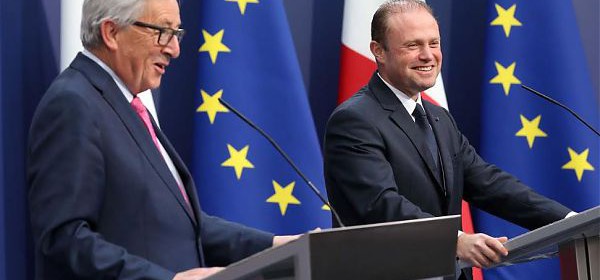
The official opening of the Maltese Presidency will take place at the Mediterranean Conference Centre during which Jean-Claude Juncker, Joseph Muscat and the President of the Council Donald Task will deliver speeches followed by a themed dance focusing on the tragedy of the problem of migration. 

As a matter of fact the theme of migration will be the centre of all the priority themes on the Maltese agenda as the government has declared that it will be working on a holistic approach involving all countries. Furthermore Malta aspires towards an improved and simplified European System for asylum seekers and an enhanced relocation programme in the European countries.

Another priority will focus on the European Union common market which will see Malta driving forces to develop a common digital market. The government will also be pushing to reach a final decision regarding the removal of roaming tariffs in the European Union countries and to strengthen consumer rights when purchasing over the internet.

Apart from this the government’s political programme includes an internal market for energy. Moreover a revision of the current efficiency package will be implemented in order for residential buildings to decrease energy consumption and to improve energy efficiency in the industrial sector.

In the light of the recent Berlin terror attacks, the subject of security will additionally form part of the priorities as citizens across Europe feel threatened and frightened and demand to be adequately protected against this uprising menace that has hit a number of countries in the past few years.

Other priorities comprise of social inclusion, the need for the European institutions to be closer to its citizens thus ensuring its relevance, the neighbouring policy focusing on the Mediterranean region and maritime affairs.

Since this is the first time that Malta has been entrusted with the Presidency from the time when it joined the EU in 2004, the country is in an advantageous position to influence the current agenda during the various ministerial meetings of the European block taking place during these six months.

Facing a major difficulty is indeed the timing of the Maltese Presidency as it coincides with the commencement of the procedures of the United Kingdom to leave the European Union following the Brexit referendum result.

Other challenges are the Euro common currency, the surge in populism against the political establishment in a number of European countries. Both the Netherlands and France will be holding their respective elections during the first part of 2017 with the right for the electorate to choose its new administration. With the recent win for Donald Trump as President of the United States, there exists an underlying trepidation across European countries that the populist ideology might be growing.

(ITALPRESS/MNA).

Photo credit: Department of Information Malta


Source: medNews

MALTA ASSUMES THE PRESIDENCY OF THE EUROPEAN COUNCIL

Malta has become the smallest state in the EU with the greatest responsibility for the upcoming six months as today the country assumes the Presidency of the European Council.

Braving heavy winds and cold temperatures, Jean-Claude Juncker, President of the European Commission together with the 27 European Commissioners were welcomed at Malta International Airport late yesterday to officially initiate Malta’s leadership at the helm of the Presidency. The wind accompanying yesterday’s event aptly symbolizes the changes that Malta led by Prime Minister Joseph Muscat will be pushing on its agenda during these six months, a period that will surely be challenging necessitating radical actions.

The day’s activities commenced with a meeting between the College of the Commissioners of the European Union and the Maltese Ministers’ Cabinet whilst Jean Claude Juncker, President of the European Commission encountered the highest authorities in Malta holding discussions with the President, Marie Louise Coleiro Preca, the Prime Minister Joseph Muscat and the Speaker of the House of Representatives, Anglu Farrugia.

“I urge you to make the European Union a place where the dignity, the peace, and the wellbeing of all are effectively and truly central”. This was the message which President of Malta Marie-Louise Coleiro Preca relayed to the President of the European Commission Jean-Claude Juncker. President Coleiro Preca shared her vision of the need for a more united Europe, stating that for meaningful unity to be achieved and nurtured “we need a stronger European Union”.

Reiterating what she had stated during the visit of the President of the European Parliament Martin Schulz last December, the President of Malta said that we need a European Union which is socially conscious, strongly democratic, embedded in solidarity, and which prioritises the wellbeing of every member of our diverse communities and societies.

At a time when different interpretations of the European project and its future are being proposed, with voices calling for walls to be built, for borders to be reinforced and for divisions to be reasserted, President Coleiro Preca appealed and said that “we cannot be silent or complicit when so much is at stake”, whilst adding that “we must remind one another of the important gains we have made”. Such gains have been made, the President of Malta said, in terms of the bridges which have been built “to unite us”; the friendships which have been made “across our borders; and our solidarity, which we have nurtured in the service of peace”.

The President of Malta reminded the members of the College of Commissioners that it is their responsibility “to ensure that such collaborations continue, while also ensuring that the social values of Europe are reflected in the social and cultural lives of our communities and nations”; she also said that they must revitalise the European Project by ensuring that the institutions are connected to the aspirations of the European peoples, whilst adding that Europe’s institutions must reflect the principles of social inclusion.

“We must work together to make our European family of nations a better place, where dialogue replaces division; where friendship triumphs over suspicion; where peace speaks more strongly than hostility”, President Coleiro Preca said.

The President of Malta urged the College of Commissioners to make the EU a place where solidarity is the defining characteristic of our European identity, “and an inheritance of lasting benefit for both present and future generations”.

In his address, Jean-Claude Juncker stressed the role of Malta in the central Mediterranean region as a key factor to strengthen relations with countries in North Africa. He referred to the challenge countries like Malta are facing because of migration, like Italy and Greece, and stressed these European states cannot be left on their own dealing with such a huge problem.

Later, Prime Minister Joseph Muscat welcomed the President of the European Commission Jean-Claude Juncker at Auberge de Castille. Both President Juncker and Prime Minister Muscat expressed their positivity for the next six months of Malta’s Presidency of the Council of the European Union.

Prime Minister Joseph Muscat said that throughout their work, Malta and the European Union must remain close to the people of Europe and their families. He said that despite the challenges and other potentially unknown challenges, he remains optimistic of the effects of the Maltese presidency in the next six months, as the Maltese Presidency and the European Commission have very similar ideas.

President Juncker agreed that more work needs to be done on the priorities put forward by our country or this presidency, including immigration.

(ITALPRESS/MNA).

Photo credit: Department of Information Malta


Source: medNews

1 … 524 525 526 527 528 … 546