Author Archives: admin.01

Maltàs emissions continue to increase, the highest in the EU

LA VALLETTA (ITALPRESS/MNA) – Malta registered the highest increase in greenhouse gas emissions in the EU for the second quarter in a row. According to Eurostat, between July and September, Maltàs greenhouse gas emissions increased by almost 8%, the same increase registered during the previous quarter.
In real terms, in the third quarter of 2022, Malta pumped out an estimated 645,000 tonnes of greenhouse gas. By the same time last year, this had risen to 695,000 tonnes.
And while Malta emitted 2.3 million tonnes of greenhouse gases in 2022, by the end of September last year Malta had already emitted more than 1.8 million tonnes.
Maltàs emissions are more than double the second-highest increase registered in Cyprus, where emissions rose by almost 3.7%. Other countries to register an increase were Latvia (3.4%) and Slovakia (0.9%).
Maltàs results are very different to the rest of the EU, where emissions decreased in 23 countries. The biggest reductions were seen in Estonia (-30.7%), Bulgaria (-18.6%) and Germany (-12.2%).
In total, greenhouse gases reduced by just over 7% across the bloc compared to the same quarter in 2022.
Across the EU as a whole, around 787 million tonnes of greenhouse gases were emitted in the third quarter of last year, according to Eurostat.
Despite Malta increasing its emissions at a faster rate than any other EU country, according to World Bank data, Malta and Sweden registered the EU’s lowest rate of emissions per capita. That is in large part due to Maltàs lack of heavy industry.
According to Eurostat between July and September, Maltàs economy grew at almost the same rate as its emissions, with GDP rising by just over 7% compared to the same period in 2022. The report notes that Italy maintained its GDP at the same level while decreasing emissions, while 11 countries managed to actually decrease their emissions while growing their economies.
Carbon emissions in Malta have long been associated with the country’s reliance on cars, something which shows no sign of letting up.
Official statistics show there are some 18,000 vehicles for each square kilometre of road in Malta, with the latest figures showing 60 new vehicles being added to the road each day.

– Foto: Agenzia Fotogramma –

(ITALPRESS).


Source: medNews

Malta’s economic growth excels that predicted in 2023

A VALLETTA (MALTA) (ITALPRESS/MNA) – According to the European Commission, Malta’s economic performance in 2023 exceeded growth expectations than it was initially projected. In 2023, the real GDP growth stood at 6.1%, 2% decrease than it was recorded in the previous year, but higher than the 4% forecasted by the European Commission. The Commission now predicts that Malta’s economy will grow by 4.6% in 2024, mostly driven by exports and private consumption. This will decline marginally to 4.3% in 2025, the Commission believes. The EC attributes Malta’s performance in 2023 to several factors, from its own upward revisions of the economy’s performance at the beginning of the year, to a “high growth” of 2.4% in its third quarter. The report notes construction activity was “weaker” in 2023, as was Malta’s investments in fixed assets.
The European Commission also predicts that inflation rates in Malta will be slightly lower than it had initially predicted, at 2.9% this year and 2.7% in 2025 attributing continuing pressures in food and services prices. By contrast, the report finds that inflation had reached a high of 5.6% in 2023, in line with what it had predicted. However, government intervention kept retail energy prices stable, mitigating some inflationary effects. The forecast comes amid calls from the European Commission to phase out Malta’s energy support measures to address government deficit concerns. Writing on X, Maltese Prime Minister Robert Abela said that these results are because “progressive decisions make a real difference in people’s lives”. The report refers to the EU’s economy performance saying it “entered 2024 on a weaker footing than previously expected”, saying that the cost of living crisis and a drop in households’ purchasing power has slowed the bloc’s economic growth. It is predicted that the EU’s economy will grow by 0.9% in 2024, rather than the original forecast of 1.3%.

(ITALPRESS).

Foto: Agenzia Fotogramma


Source: medNews

Malta, farmers present five proposals to the government

LA VALLETTA (ITALPRESS/MNA) – Maltese farmers presented a set of five proposals to the Maltese government at the end of a national protest in Valletta waterfront, close to where the Virtu Ferries catamaran from Sicily docks.
Malcolm Borg of Ghaqda Bdiewa Attivi said, here is where most of the imported food arrives in Malta, while asking, “can we keep depending so much on importation and dismissing local produce?”
Currently, Malta imports approximately 80% of its food requirements, both fresh and frozen.
Presenting the proposals to the government, Borg listed want they are insisting on to protect their livelihood and secure the local produce.
Maltese farmers are requesting that non-EU food products should be blocked from entering Malta if local supply meets demand. The government should negotiate with the EU to get the clearance to do that. They are also asking for more stringent testing of non-EU food products. Malcolm Borg of Ghaqda Bdiewa Attivi argued that importers of non-EU goods are also selling local consumers inferior products. He alleged that Argentinian beef exported to France is then repackaged and sent to Malta after its initial expiry date.
The demonstrators are calling for government subsidies on fertilizers, animal fodder and the costs of local feeds.
Farmers declared that it is “absurd” for a country like Malta with limited agriculture land to consider and encourage land to remain fallow.
Farmers are requesting the Maltese government to block EU laws that can influence local agriculture from being implemented until there is enough proof that impacts will be negligible. Farmers cited laws arising from the European Green Deal or laws to end cage farming for chickens as cases in point.
It was the farmers’ second protest in as many weeks and one of a series of farmers’ protests across European capitals including Rome, Madrid and Athens.
-photo Agenzia Fotogramma-
(ITALPRESS).


Source: medNews

Ghiringhelli “Airline sector recovering, Italy strategic for Emirates”

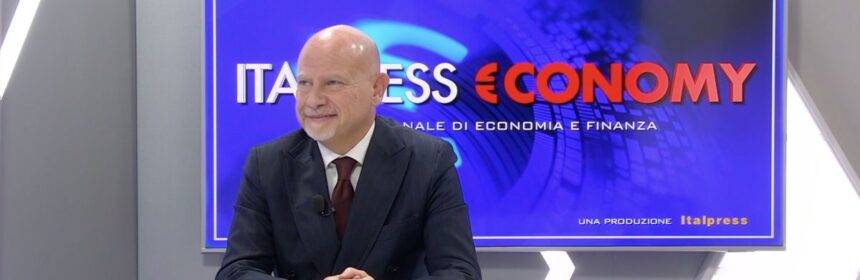
ROME (ITALPRESS/MNA) – The pandemic “was a situation that created various problems for all airlines, because it was the first time in which the engines were completely shut down – something that has never happened before in the world of air transport – but now almost all carriers have restarted in the best possible way and work is underway to reach pre-covid levels. We are investing in aircraft fleet, in new routes and to provide a series of additional services to all our customers while rethinking the logic of air transport of the future”. This was said by Flavio Ghiringhelli, Country Manager of Emirates Airlines in Italy, interviewed by Claudio Brachino for “Italpress Economy”.
“In 2023, after the pandemic, we had to introduce new staff: already in August we had reached over 20,000 people in the company’s workforce” and “this year we started with a recruitment campaign for 5,000 people who will work as cabin crew”, he added. “We started a campaign to address two particular needs: the first is to strengthen the number of people who collaborate in this department, which is very important in terms of the hospitality we give to our customers. Then we made a multi-million dollar investment, we have a list of over 300 airplanes that will soon arrive and will also be included in the Italian market.”
After Covid, “many people who normally traveled in economy class asked us to have a little more space”, suggesting “that we introduce a new class”, Premium Economy. “We are working on the materials, the design of the seats and the interiors of the aircraft: we are the first airline in the world to offer four different class options for traveling” and, “where we have already making it available, especially on long-haul destinations, we have a very high return of satisfaction from our customers”. On the routes, “we are completely recovering the entire network that we had during the pre-covid, apart from some destinations in China which are not yet available, and on some destinations – in particular Australia – we have increased the number of frequencies, because we realized that not only Australians want to travel, but that the whole world wants to go to Australia.”
Emirates “considers Italy a strategic country, it is the eighth most important market in the world and the third in Europe, so we certainly give particular attention. Today we operate 41 weekly frequencies from Milan, two flights a day to Rome, one daily flight to Venice and six times a week to Bologna”. As regards sustainability, “air transport as an industry is also focusing a lot on sustainability, but if we look at the impact of air transport on the total contribution to the production of Co2 in the air, the percentage of air transport is very low, only 2.9%, compared to other industries. Despite this, we are committed to working hard on sustainable fuels, which allow us to operate safely with extremely limited pollution. We have the possibility of working on aircraft routes and using new generation mobile robots, which actually allow us to consume even less.” For the world of air transport, “technology is an extremely important element because it allows us to make an evolution compared to traditional activities”, for example with “the use of facial recognition systems to speed up activities at the airport” or with the technologies that today allow us to go to the gate even without printing the boarding pass. “We are developing an activity linked to the maintenance of our aircraft, we are training our engineers without the need to be trained in hangars”.

– foto Italpress –
(ITALPRESS).


Source: medNews

Malta, farmers protest against national authorities and the EU

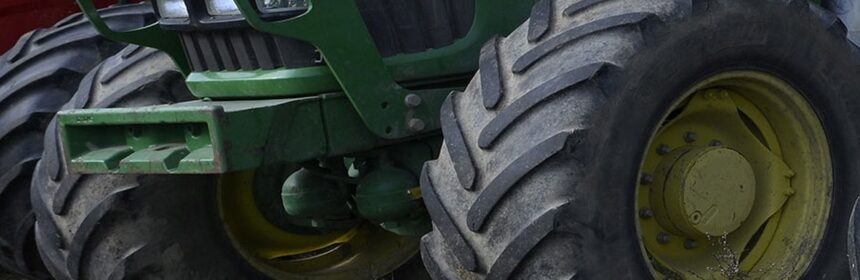
LA VALLETTA (MALTA) (ITALPRESS/MNA) – Maltese farmers took to the streets of Malta in a second national protest in two weeks against the Maltese government and the EU rules. The protest organized by the Ghaqda Bdiewa Attivi, along with others representing various sectors within the local food industry, ended in Valletta where local farmers voiced their worries and fears regarding overregulation and its detrimental effects on Maltàs agriculture sector. Before reaching Valletta, farmers onboard tractors and other farming vehicles stopped at the offices of the Malta Competition and Consumer Affairs Authority. They fixed signs reading “we are here to safeguard their food” and “no farmers, no food, no future” to the main door. Farmers say the authority should check on products coming from foreign, and especially non-EU, countries. The farmers met with Agriculture Minister Anton Refalo, who showed solidarity with the farmers. Shadow Agriculture Minister Toni Bezzina also said that the Opposition backed the farmers, saying “it does not make sense to put Malta in the same categories as other countries, with much larger resources and land than ours”. The Ghaqda Bdiewa Attivi presented several proposals to the Maltese government aimed at mitigating the adverse impact of these policies. Farmers’ lobby president Malcolm Borg said that should the government implement the proposals, food producers would be able to withstand the impact of the new EU rules. Farmers urged Maltese politicians, when voting at the European level, to engage with groups of farmers to speak coherently about the challenges they face. They also accused the Maltese government that had voted against their interests so they had to come out and protest. Farmers and herdsmen are also upset with EU trade deals that remove or reduce barriers for non-EU agricultural products. They are also against state aid rules that limit government support, and EU rules that reward farmers for leaving fields fallow – a technique to allow land to recover – saying this was an incentive to landowners to keep land unproductive. Farmers also say European legislation intended to make farming more environmentally friendly is being introduced too quickly and without the necessary support. Another argument is that compliance to EU regulations is increasing and reduce the productivity, while facing influx of less-regulated non-EU products into European markets.
(ITALPRESS).
– Photo credit: Agenzia Fotogramma –


Source: medNews

Maltàs GDP expected to grow by 4.4% in 2024

LA VALLETTA (ITALPRESS/MNA) – Maltàs gross domestic product (GDP) is expected to grow by 4.4% in 2024. This is the forecast by Maltàs Central Bank in its latest report on the Maltese economy, adding that this is based on the private consumption and net exports registered lately.
The domestic demand is expected to be the main driver of growth in 2024. Private consumption growth continues at a brisk pace and private investment, is expected to recover slowly. Net exports are also projected to contribute positively, driven mainly by services exports. However, economic growth is expected to slow down to 3.6% in 2025, and to 3.3% by 2026. Growth in 2025 and 2026 is expected to be led by domestic demand.
Wages are expected to pick-up in 2024, in view of the high inflation in the recent past, and a tight labour market.
Annual inflation based on the Harmonised Index of Consumer Prices is projected to ease from 5.6% in 2023 to 2.9% in 2024, before reaching 1.9% by 2026.
The general government debt-to-GDP ratio is expected to increase, and to reach 54.3% by 2026.
The ongoing geopolitical tensions and disruptions to shipping around the Suez Canal could could affect negatively the economic activity and trade causing longer waiting times, and possible higher costs.
– photo Agenzia Fotogramma –
(ITALPRESS).


Source: medNews

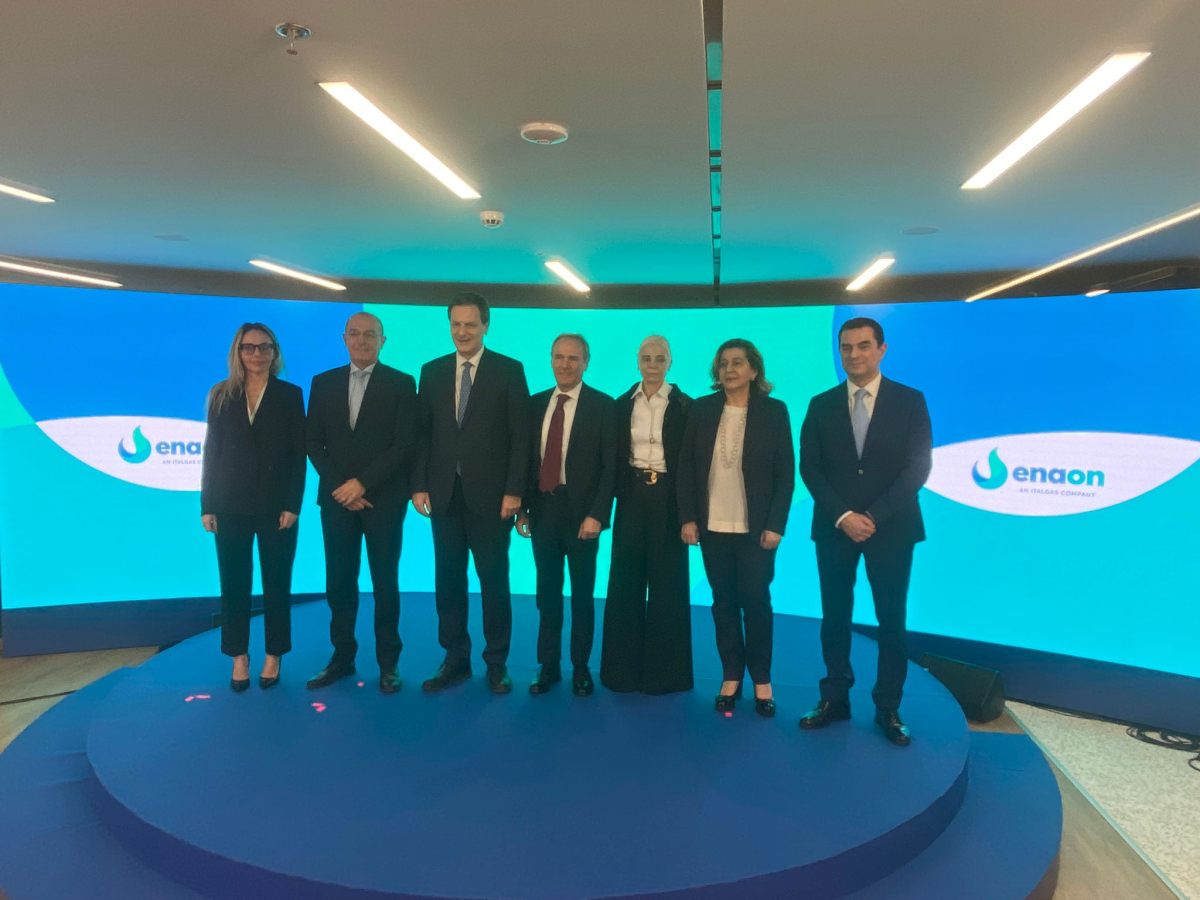
Italgas, the greek subsidiary changes name and becomes Enaon

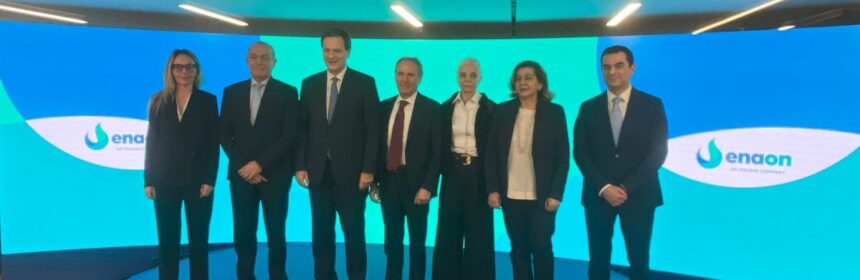
ATHENS (GREECE) (ITALPRESS/MNA) – The Italgas Group has presented the new identity of its Greek companies, and from today the holding company has changed to ‘Enaon’ while the operating company’s new name is ‘Enaon Edà.

The name and brand of the now former Depa Infrastructure were unveiled at the Politia Business Center in Athens, where the new offices of the company acquired by Italgas in September 2022 are located.

“Today, with the launch of Enaon, we inaugurate a new chapter of our path. The launch of the new corporate image takes place at a time in which we have already successfully achieved important objectives that will make us work better and with greater efficiency,” said the CEO of Italgas, Paolo Gallo, who announced publicly the new name and the new brand in the presence of Theodoros Skylakakis, Minsiter for the Environment and Energy, Kostas Skrekas, Minister for Development and the Italian Ambassador to Greece Paolo Cuculi. The name Enaon draws inspiration from the Greek word Aenaos, which translates into “perennial” and “renewable” and which, associated with the world of energy, aims to represent a lasting offer, capable of satisfying current needs and the well-being of future generations.

The Minister of Environment and Energy Theodoros Skylakakis was also enthusiastic about the new development, reiterating the importance of natural gas in the present and future market: “The objective is to bring the assets of this sector into the future. We need natural gas because we have large infrastructures in Europe and we need to use them together with electricity, so as to have a more efficient energy system. For us it is important to be a partner of important Italian companies and to be able to build these infrastructures for the future with them.” Some of the objectives achieved by the Italgas Group since the acquisition of Enaon include the integration into the group, the reorganization of the company and the implementation of important interventions for the digital extension and transformation of the networks in Greece. A few hours before the announcement of the company’s new identity, these issues were discussed by the president of Italgas, Benedetta Navarra, the CEO of Enaon Eda, Barbara Morgante, the CEO of Enaon Eda, Francesca Zanninotti and the CEO of Italgas, Paolo Gallo.

“Eighteen months after the closing, perhaps a little less, the path taken has been effective and above all faster than expected with the acquisition plan,” said Gallo, adding “Through investments, 25 territories have been connected covering a total of 800 kilometers of networks. In 2023 we recorded a 78% increase in investments compared to those of 2021 and we will do even better in 2024. We have reorganized the operating companies into a single DSO with important expected benefits in terms of greater efficiency, operational effectiveness and knowledge sharing. We are therefore very satisfied with the investment made in Greece.” The Group has already achieved some of the milestones expected at the time of closing and set in the Strategic Plan to 2029, with a 900 million euro investment programme. Among the main infrastructure projects carried out in the country, the entry into operation of the new city network of Kavala, the transformation from oil-derived products to natural gas networks in Thessalia and Attica and the installation of the first cryogenic LNG deposits in Florina and Kastoria, built according to the know-how developed in Italy for the methanization of Sardinia. “In 2024 we planned to extend the network and activate 13 new cities,” revealed the CEO of Enaon Eda, Francesca Zanninotti, adding “We will bring the experience gained by Italgas in Sardinia to these territories. In terms of growth, last year we activated 25,000 new customers and the plan for this year is to activate 38,000 thanks to the expansion into new areas”.

– Photo Italgas press office –

(ITALPRESS).


Source: medNews

Incoming European Parliament must defend European Industry and Jobs

BRUXELLES (ITALPRESS/MNA) – Oped by Antonello Ciotti, president, Petcore Europe
Few people could have predicted the series of events that unfolded during the 2019-2024 European Parliament mandate – from Brexit and Covid 19 through to wars on our doorstep and blockades of our trade routes. The fast-evolving global landscape not only reminds us of our vulnerability, but also underlines the importance of retaining key manufacturing industries within the EU27 and upholding European competitiveness.
Against a background of continued economic and political uncertainty it is vital that the incoming European Parliament defends and supports European manufacturing. We must not lose the ability to produce critical materials within our own borders or threaten the very existence of key industrial sectors by weighing down domestic producers with disproportionate regulatory burdens or failing to protect them against unfair practices and competition. Europès economy needs a strong primary manufacturing base.
Take the PET industry. PET is used to make bottles and trays and the sector has been subject to a raft of EU legislation in recent years – including the very specific requirements of the Single Use Plastics (SUP) Directive and the Packaging and Packaging Waste Regulation (PPWR). No other material has received such stringent and specific targets.
It is largely thanks to these pieces of legislation that the PET value chain is already way ahead of the field and well on its way to meeting its targets of segregated collection, 90% collection by 2029 and minimum 30% recycled content by 2030. Moreover, we are proving that these targets can be achieved. Today, one-third of EU markets already reach 90% PET bottle collection due to enabling policies and infrastructure and PET is steadily being used in reuse systems too – such as bottled water in Germany.
As primary producers of a widely-used material for packaging, our sector recognises that it has a major responsibility and we take this responsibility very seriously. Post consumer PET bottles are a precious secondary raw material for the production of a long list of goods which are in condition to preserve food, drugs, medications and many other goods that are essential for our wellbeing.
By diverting waste away from landfill or incineration and back into the circular economy, the PET industry offers a packaging that is fully recyclable in practice and at scale. This supports the ambitions of a raft of stakeholders including governments – who want to transition to a low carbon future; consumers – who are keen to end plastic waste; and brand owners – who want to place their products in sustainable packaging options. Equally importantly, by continuing to collect and recycle its raw material, Europès PET industry is also addressing the shared objectives of industry, government and civic society who are looking to build a sustainable and fair business environment.
When I reflect on the demonstrations in front of the European Parliament in Brussels recently, I see that our concerns are actually very similar to those of the people who are taking to the streets: Ensuring a fair, level playing field for Europès domestic industries will protect both our EU economy and the livelihoods of millions of citizens. The 2024-2029 European Parliament must work to create sustainable production models that support Europès industries and ensure that they can continue to compete on the global stage today and in the years to come.
– photo Antonello Ciotti –
(ITALPRESS).


Source: medNews
Malta, authorities blocked 3 tonnes citrus fruits imported from Sicily

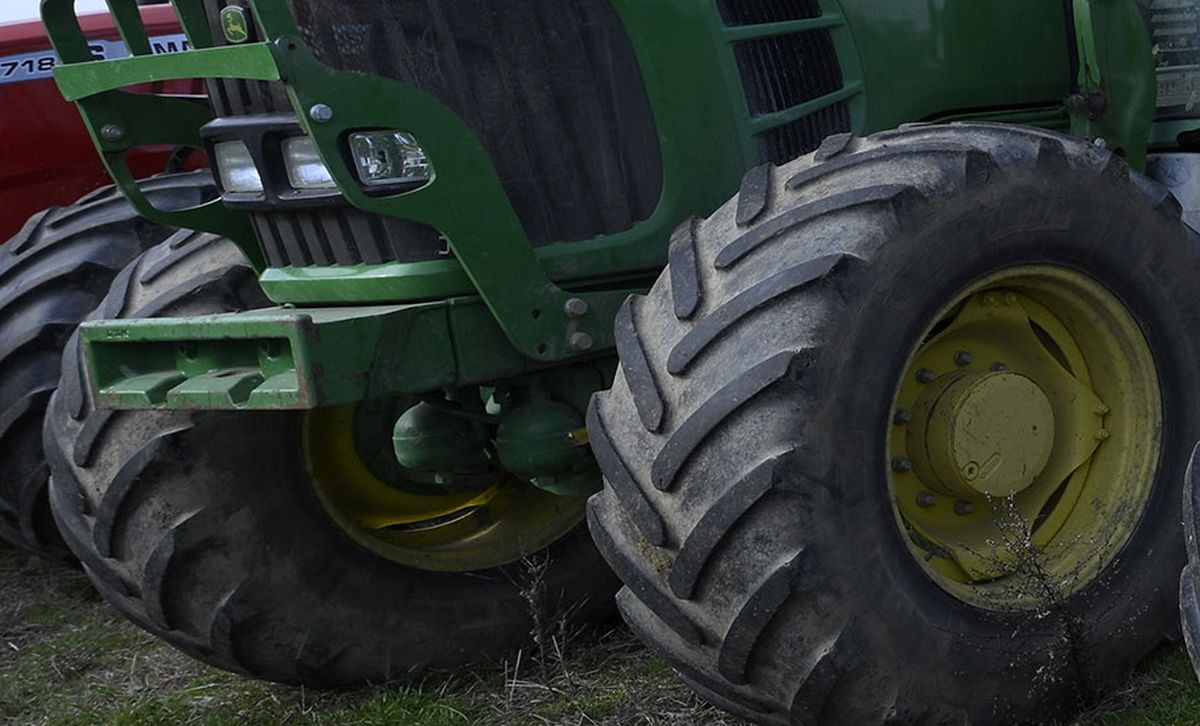
LA VALLETTA (MALTA) (ITALPRESS/MNA) – The Maltese authorities blocked more than three tonnes of oranges, lemons and mandarines imported from Sicily were blocked from entering the Maltese market on Saturday morning. The 3,033kg of citrus fruits was packed into 306 boxes and brought to Malta via the catamaran from Pozzallo.
The agriculture ministry said it was returned after inspectors noted that the fruit was packed together with leaves and stems, in violation of pest control rules. The Plant Health Directorate will also be seeking to sanction the importer, in line with the Plant Quarantine Act.
Citrus trees are vulnerable to a variety of pests, with the Citrus Tristeza Virus (CTV) being among the most dangerous.
CTV is present all across the globe and impacts all citrus trees. The virus cannot be controlled by any pesticide, and the only control mechanism for this disease is that of uprooting and burning infected trees and applying pesticides for the vectors. Malta has seen a number of CTV outbreaks in the past decade.
The agriculture ministry said, “Inspections are carried out to ensure organisms that can harm local plants are not allowed into the country and given the chance to spread,” adding, “the illegal trade of citrus fruit that does not conform with Maltese laws places local agriculture at risk. The interception of this fruit is a testament to the government’s commitment to protect local farmers and consumers”.
– photo DOI –
(ITALPRESS).


Source: medNews
1 … 416 417 418 419 420 … 564