Tag Archives: Top News

MEDITERRANEAN: UFM, NEW PHASE REGIONAL COMMITMENT
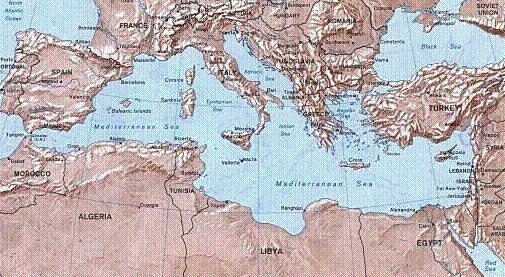
 This past year has demonstrated once again that the scope and scale of the challenges faced by the Euro-Mediterranean region relating to security, migration, unemployment and climate change require swift collective and concerted responses. The Union for the Mediterranean (UfM) works proactively to achieve greater levels of integration and cooperation in the region through a specific methodology that has yielded positive results in terms of political dialogue and the implementation of region-wide initiatives in which young people play a key role.

Under the active leadership of the UfM Co-Presidency – held by the EU and Jordan – and with the active involvement of the UfM Member States, 2016 has marked a turning point for the institution at the political and operational levels. The UfM 2016 Annual Report showcases 10 new labelled projects during the last year aimed at SME development, job creation, women’s empowerment, renewable energy and depollution, infrastructure development and education. Altogether, the UfM adds up to 47 projects with a budget of €5.3 billion. The tangible positive impact from the first wave of projects is already visible involving over 200,000 beneficiaries in the region, mainly women and young people.

UfM initiatives aim to consolidate human development (26 projects) and promote sustainable development (21 projects) as the main drivers for stability and integration in the region.

The first pillar of action includes initiatives linked to job creation, entrepreneurship and gender equality, such as the Mediterranean Initiative for Jobs (Med4Jobs). More than 50,000 women benefit from women’s empowerment programmes. In terms of sustainable development, in 2016 the UfM launched emblematic projects such as the depollution of Lake Bizerte, under the EU’s Horizon 2020 Initiative for a cleaner Mediterranean Sea, and the SEMed Private Renewable Energy Framework (SPREF), developed in cooperation with the EBRD to encourage the growth of private markets for renewable energy in Egypt, Jordan, Morocco and Tunisia.

(ITALPRESS).


Source: medNews
SPAIN, STABILITY PROGRAM AND NATIONAL REFORM PROGRAM 2017

Stability Program 2017-2020 and Spain’s National Reform Program 2017 have been approved. The positive revision of growth forecasts for the coming years is among the main innovations of the Stability Program. In fact, the Spanish economy is expected to increase by 2.7% in 2017 (2.5% in the previous estimates) and by 2.5% in 2018 and by 2.4% in 2019 and 2020.

In addition, the unemployment rate will be around 11.2% at the end of 2020. This forecast, in the event of occurrence, would represent a decrease of 16 percentage points compared to the maximum achieved during the crisis period. It should be noted that at the present time (1st quarter 2017) unemployment rate is 18.75%. The government plans to create 500,000 jobs per year, reaching a total of 20.5 million workers in the coming years.

The Stability Program also keeps the fiscal consolidation targets set for Spain; therefore, the public deficit should amount to 3.1% of the GDP in 2017; to 2.2% in 2018 and to 1.3% in 2019. It should be noted that the expected deficit target for 2020 is 0.5% of GDP, which would allow Spain to reach an almost balanced budget.

(ITALPRESS/MNA).


Source: medNews

MOROCCO, OPTIMISTIC FORECAST OF THE IMF

At the conclusion of the meetings held in Washington between 17 and 23 April, the International Monetary Fund raised its forecasts for economic growth in the North African and Middle East (including Afghanistan and Pakistan). Overall, the economic outlook for these regions is declining, with the growth passing from + 3.9% in 2016 to + 2.6% this year, due to the reduction in oil extraction decided by OPEC in November, in addition to the political instability in the area. Saudi Arabia would see its growth fall from + 1.4% in 2016 to +0.4% in the current year, while the United Arab Emirates would move from +2.7% to +1.5%. In North Africa, growth prospects in 2017 are decreasing for both Algeria and Egypt, while Morocco, according to analysts at the International Monetary Fund, would see a significant increase in its economic dynamics, which would go from +1.5% in 2016 to + 4.4% in the current year. The positive outlook for the Moroccan economy, developed by the IMF, is expected to continue to grow even in the coming, provided that the country implements the planned reforms aimed at improving the business environment, tax policies and the education system.

(ITALPRESS/MNA).


Source: medNews

S&P, NEGATIVE PERSPECTIVE FOR JORDAN

The International rating agency Standard & Poor’s has lowered the country’s long-term rating from BB to B, mainly due to weak fiscal flexibility and rising public debt and due to a number of national and regional factors.

Jordan was placed in the seventh group of BICRA, along with Bulgaria, El Salvador, Indonesia, Morocco, the Philippines, Portugal and Slovenia.

The report cited “tax resistance”and credit risk in Jordan, with “intermediate” economic imbalances, while industrial factorswere described in a “high” institutional framework, characterised by competitiveness.

S&P’s report states that regional tensions continue to challenge economic growth. However, it states that the reopening of trade routes with Iraq should benefit from export and transit revenues and thus reduce financial and economic burdens. The report noted the “comforting” performance of the Jordanian banking system and fiscal policies of the Jordanian central bank, despite a slight decline in foreign exchange reserves due to the need to balance the losses caused by the closure of the borders with neighboring countries.

Jordanian economist Mifleh Aqel said he disagreed with the negative outlook given by S & P report, arguing it did not take into account the economic indicators for the first quarter of this year. The economist stressed that the vital sectors recorded positive performance indicators over the last three months, including tourism, exports and remittances by Jordanian expatriates, citing good financial market activity this time of year. He also noted that the Jordanian economy survived 6 years of conflict in Syria and a year of border closure with Iraq. As for investments, he said the whole region is witnessing a drop in the volume of investments, mainly due to the fall in oil prices.

(ITALPRESS/MNA).


Source: medNews

ALBANIA, HOUSING PRICES INCREASED BY 12.8% IN 2016

The Central Bank of Albania reveals that housing sales prices recorded a substantial increase in 2016, rising by an average of 12.8 percent. The phenomenon occurred in the central areas of the capital, while in the seaside areas there was a decline not only in prices but also in volume of sales. According to the Central Bank, 68 percent of sales were made through bank mortgages.

It has been noted, for the first time since 2013, also a decline in the number of unsold houses.

(ITALPRESS/MNA).


Source: medNews

LEBANON, GDP EXPECTED TO GROW BY 2% IN 2017

The International Monetary Fund (IMF) foresees growth in real Lebanese GDP by 2% in 2017, thus keeping its growth forecast announced in October 2016, before the formation of Saad Hariri’s government on 18 November.

In addition, the IMF predicts a return of inflation in 2017 to 2.6% against the 2% estimated in October, while the consumer price index would record a -0.8% in 2016 against the previous forecast of -0.7%.

(ITALPRESS/MNA).


Source: medNews

TUNISIA, 1 BILLION DOLLARS FROM QATAR TO SETTLE THE BUDGET

Tunisia Finance Minister Lamia Zribi has announced the funding by Qatar to Tunisia for approximately $ 1 billion to be allocated for government reorganization. This is what the Minister said, on the commitments made by the Emir of Qatar, Temim Ben Al Hamad Al Thani, at the Tunis International Investment Conference held in Tunis last November. In particular, 500 million dollars are for the repayment of a Qatar loan expiring on 18 April 2017, with an additional 500 million dollars bank deposit with the Tunisian Central Bank (Bct), whose repayment is expected in the short term. Another 60 million euro financing agreement for the construction of 32 bridges in 21 governorates of the country was signed by the Minister of Development, Investment and International Cooperation, Fadhel Abdelkefi, and the Arab Development Fund (Fades).

(ITALPRESS/MNA).


Source: medNews

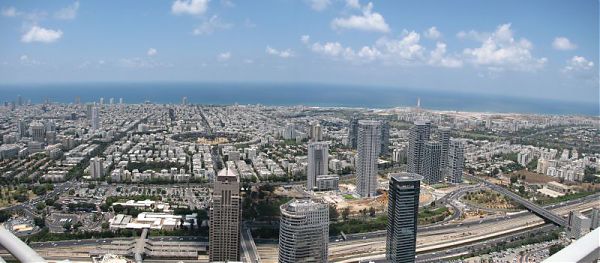
ISRAEL, RECORD NUMBER OF TOURISTS IN THE FIRST QUARTER 2017

The first quarter of 2017 recorded 739,000 tourists, 24% more than the same period last year; Only in March, arrivals were 293,000, 22% more than March 2016; In both cases it is a record. The news is reported by the Israeli newspaper Jerusalem Post.

According to the Ministry of Tourism, the estimated economic impact is 4 billion shekel (about 1 billion euros) and 5,000 new jobs.

As pointed out by the Minister of Tourism, Yariv Levin, it was not a coincidence, but the result of a strategy defined through the expansion and development of marketing activities on the one hand, and the increase of new routes and Airlines on the other, which contribute to the increase of visitors; of the 739,000 tourists, about 655,000 have, in fact, traveled by plane, 20% more than in the previous year.

The government is also committed to increase the supply of hotels through the renovation and construction of new facilities in the most visited places such as Tel Aviv, Jerusalem and the Dead Sea.

(ITALPRESS/MNA).


Source: medNews

EGYPT, INDEPENDENT ECONOMIC ENTITY FOR GOLDEN TRIANGLE

An independent economic body based in Qena should be established by the Egyptian government in May 2017 for the management of projects in the so-called Golden Triangle Area. This is reported by InfoAfrica agency. Located in Upper Egypt, between Qena and Safaga Quseyr, The Golden Triangle covers over 10,000 square kilometers and is the richest area of mineral resources of Egypt. The project for the exploitation, whose master plan belongs to the study of the Italian consultancy D’Apollonia, foresees the development of different sectors, including tourism, industrial, agriculture, commercial, and primarily mineral.
(ITALPRESS).


Source: medNews

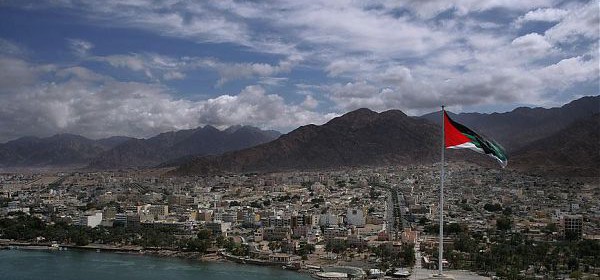
JORDAN, LAUNCH OF THE TENDER FOR AQABA SPORTS CITY

The Aqaba Development Corporation has launched the tender for the construction of Aqaba Sports City, a multi-purpose sports complex. The Aqaba Sports City will be built on an area of 255,000 square meters, only 12 km away from the center of Aqaba.

The project aims to create a city full of sports, able to accommodate most sports events and it is hoped it will become a potential destination for sports tourism at national, regional and international levels.
The project involves the construction of a stadium, designed according to international standards and those of FIFA, with an initial capacity of five thousand spectators, expandable up to thirty thousand spectators.

The construction of another stadium is also planned. It would be used for education and training of athletes, and will be surrounded by a track that could be used for other athletics games. In addition, outdoor courts for basketball, volleyball and handball will be built. Moreover an indoor sports hall, with a multi-purpose gym (volleyball, basketball and fitness activities) and gym for martial arts, athletics and gymnastics, as well as two swimming pools, one Olympic and one for diving, a football stadium with two football fields in synthetic, a fitness center, a billiards room, table tennis room and bowling alleys.
The project includes several restaurants and cafes distributed within the different parts of the complex, three hotels (4 and 5 stars), boutiques, administrative offices, a clinic and a center for therapy.(ITALPRESS).


Source: medNews

1 490 491 492 493 494 516