medNews

Malta’s trade deficit narrows, but Trump tariffs threaten fragile balance

Malta’s trade deficit narrows, but Trump tariffs threaten fragile balance

LA VALLETTA (MALTA) (ITALPRESS/MNA) – Malta’s trade deficit has narrowed slightly in the first two months of 2025, according to newly released figures from the National Statistics Office (NSO), but mounting pressures from U.S. trade policy are casting long shadows over the island nation’s economic outlook.

Provisional data shows that Malta’s trade deficit stood at €486 million between January and February 2025, down from €502 million during the same period last year. This modest improvement came amid a sharp slowdown in both imports and exports, which fell by 10% and 14% respectively.

The figures reveal a stark transformation in Malta’s trading landscape, with the U.S.–Malta trade corridor bearing the brunt of global economic tensions. Exports to the United States collapsed to just €11.9 million in February 2025, down from €138.5 million a year earlier — a staggering 91% plunge. The dramatic fall has reversed what was once a substantial surplus into a €15.7 million trade deficit.

The reversal is widely attributed to U.S. President Donald Trump’s newly imposed 20% blanket tariff on imports from the European Union, which includes Malta. The move, part of a sweeping protectionist policy also targeting China with tariffs of up to 104%, has stoked fears of a full-blown global trade war.

Given that the EU remains Malta’s primary trading partner — accounting for 55% of imports and 34.2% of exports — the implications of these tariffs are significant. Key export sectors are already showing strain, with pharmaceutical exports down 11% and electrical machinery slipping 2%.

Despite the broader headwinds, the data points to some surprising new growth markets. Exports to Turkey skyrocketed to €26.7 million in February 2025, up from just €1.8 million the previous year — a nearly 1,400% increase. Similarly, exports to the Philippines jumped from €0.3 million to €8.6 million.

Germany emerged as Malta’s only major trade partner with a positive trade balance in early 2025, generating a €50 million surplus largely driven by robust exports of pharmaceuticals and machinery. Meanwhile, Malta’s trade deficit with Italy was halved, falling to €62 million as imports from the country dropped significantly from €159 million to €72 million.

In terms of sectors, mineral fuels remained Malta’s largest import category at €345 million over the two-month period, though February’s figure marked a 33% decline year-on-year. Pharmaceuticals showed some resilience, with imports rising 4%, but exports in the same category slumped 11%.

One of the most striking sectoral shifts came in the precious metals and stones category, where exports soared over 5,000% to €25.3 million — suggesting a potential pivot towards high-value, low-volume goods that are less vulnerable to tariff pressures. Similarly, imports of organic chemicals surged by 527%, reaching €25.1 million in February.

However, not all sectors fared well. Machinery and transport equipment exports were particularly hard hit, plunging by €161.3 million in the first two months of the year. Exports of vehicle parts alone dropped 24% to €22.7 million, mirroring wider global supply chain realignments.

For February alone, Malta registered a trade deficit of €183.5 million, down from €198.3 million a year earlier. Imports stood at €534.6 million, while exports totalled €351.1 million — both representing substantial year-on-year declines.

As global trade dynamics continue to shift rapidly, Maltese policymakers face growing pressure to diversify export markets and cushion the economy against external shocks — particularly as tensions with major partners like the U.S. show no signs of easing.

– photo IPA Agency –

(ITALPRESS).


Source: medNews

Mediterranean Sea, Ngo “Urgent rescue needed for 37 migrants”

Mediterranean Sea, Ngo “Urgent rescue needed for 37 migrants”

TRIPOLI (LIBYA) (ITALPRESS/MNA) – A group of 37 migrants is in urgent need of rescue south of Sicily, after spending several days adrift at sea. According to an alert issued by the organization Alarm Phone, the group departed from Libya and is currently stranded in a boat taking on water. Alarm Phone, which assists people in distress in the Mediterranean, reported that they had contacted authorities regarding the situation.

The organization emphasized the dire condition of the vessel and the immediate danger faced by those onboard. “These people have already been at sea for several days – Alarm Phone stated on X -. Water is entering the boat. Rescue is needed—immediately”.

Meanwhile, in a dramatic rescue operation amid high waves, Sea-Watch International’s vessel Aurora has safely brought approximately 80 people on board after receiving an urgent alert from Alarm Phone about a boat in distress in the Mediterranean. Responding immediately, the crew of Aurora launched a rescue mission despite challenging weather conditions. Thanks to their swift action, all individuals were brought safely aboard.

The Aurora disembarked all the migrants rescued on the island of Lampedusa last night. The 80 people are all alive and receiving assistance on land.

– photo IPA Agency –

(ITALPRESS).


Source: medNews

Maltàs Credit Rating confirms strong growth but fiscal challenges

Maltàs Credit Rating confirms strong growth but fiscal challenges

VALLETTA (MALTA) (ITALPRESS/MNA) – Credit rating agency Morningstar DBRS has reaffirmed Maltàs long-term foreign and local currency issuer ratings at A (high) with a stable outlook, underlining the country’s robust economic growth and resilient external position. The agency also confirmed Maltàs short-term foreign and local currency ratings at R-1 (middle) in its latest report published Friday.
Despite headwinds from global economic uncertainty, DBRS credited Maltàs diversified, services-driven economy for outperforming the Eurozone, while also pointing to mounting pressures from fiscal deficits, population growth, and governance issues.
Maltàs economy expanded by 6% in 2024, a sharp contrast to the 0.9% average growth across the Eurozone. The performance was fueled by strong tourism, professional services, and financial sector exports. While growth is projected to slow to 4% in 2025 and 3.6% in 2026, DBRS expects Malta to continue outpacing its European peers.
“Despite global uncertainties, Maltàs service-driven economy is less vulnerable to trade shocks like higher US tariffs,” DBRS noted. However, it cautioned that the country’s labour-intensive growth model and rising population density could put pressure on infrastructure.
The agency observed that Maltàs fiscal deficit narrowed to 3.7% of GDP in 2024, down from 4.6% in 2023, driven by strong revenues. Nonetheless, DBRS warned of ongoing fiscal pressures, including energy subsidies and new spending commitments like the teachers’ wage agreement.
The Central Bank of Malta projects the deficit to fall below the EU’s 3% threshold by 2026, but DBRS highlighted that new household support measures-such as income tax cuts costing an estimated 0.5% of GDP – could slow fiscal consolidation.
In addition, continued reliance on energy subsidies and uncertainties surrounding revenue from the citizenship-by-investment scheme and corporate tax reforms were flagged as risks to fiscal stability.
Maltàs public debt is expected to rise gradually from 48.9% of GDP in 2024 to 50.1% by 2026, still below the Euro area average. The country’s interest burden remains relatively low, providing the government with fiscal flexibility if economic conditions deteriorate.
“While debt is higher than before the COVID-19 shock in 2019, the current level gives the government valuable space to support the economy if under stress,” DBRS said.
DBRS praised Maltàs banking sector for its strong capital position and low levels of bad loans. Core domestic banks had a Tier 1 capital ratio of 21% and a non-performing loan (NPL) ratio of 2.1%. However, the sector’s high exposure to residential mortgages-accounting for 66% of total private sector loans – was noted as a vulnerability.
Governance remains a “mixed picture,” according to the report. While DBRS acknowledged Maltàs removal from the FATF grey list and ongoing judicial reforms, it also pointed out declining indicators for government effectiveness and control of corruption.
The agency called for “more tangible evidence of enhanced efficiency and effectiveness” in Maltàs institutions, particularly in the judiciary and anti-corruption efforts.
DBRS indicated that a credit rating upgrade could occur if Malta demonstrates significant improvement in debt reduction or increased economic resilience. Conversely, a downgrade could result from a reversal in governance reforms or a deterioration in public finances.
Social and governance factors-especially human capital and institutional transparency – played a significant role in the credit rating assessment, the agency emphasized.

– Foto IPA Agency –

(ITALPRESS).


Source: medNews

Maltese Civil Protection team completes mission in Libya

Maltese Civil Protection team completes mission in Libya

VALLETTA (MALTA) (ITALPRESS/MNA) – A team from Maltàs Civil Protection Department has successfully concluded a five-day mission in Al-Asabaa, Libya, where a series of fires of unknown origin have destroyed dozens of homes, forcing many families to flee their homes. The operation, carried out under the EU Civil Protection Mechanism, aimed to provide direct support on the ground, preliminary assessments and coordination with local authorities to address the growing crisis. The joint mission carried out damage assessments in the affected areas and presented initial findings to the Libyan authorities to help with ongoing investigations. The cause of the fires remains unclear, although officials have ruled out the presence of toxic gases or dangerous chemical or biological substances.

The Minister of the Interior, Byron Camilleri, praised the work carried out by the Maltese team, saying that the mission is an example of Maltàs ongoing commitment to international solidarity and emergency response. Local Libyan authorities are continuing to work to determine the cause of the fires, which occurred in several areas of the Al-Asabaa municipality. Mayor Emad Al-Maqtouf chaired a meeting during which geographical maps of the fire sites, initial data analysis and details of the procedures used to collect and assess environmental samples were presented.

The Al-Asabaa municipality, in coordination with national and international bodies, has formed a scientific team to lead the investigation. As the investigations continue, the Maltese government has reiterated its commitment to supporting further missions and to strengthening the island’s role as a reliable partner in regional and international humanitarian efforts.

-Photo: Maltàs Ministry of the Interior-

(ITALPRESS).


Source: medNews

Tunisia and NATO discuss strengthening bilateral cooperation

Tunisia and NATO discuss strengthening bilateral cooperation

LA VALLETTA (MALTA) (ITALPRESS/MNA) – Tunisian Defense Minister Khaled Shili met with NATO’s Special Representative for the Southern Neighborhood and Deputy Assistant Secretary General for Political Affairs and Security Policy, Javier Colomina, to explore ways to deepen collaboration between the two sides.

Shili emphasized the importance of broadening the scope of cooperation and implementing effective mechanisms to ensure the development and follow-up of existing agreements. He particularly highlighted the need to strengthen ties in the areas of military training and the exchange of expertise.

During the meeting, Colomina reaffirmed NATO’s commitment to bolstering its partnership with Tunisia. He expressed the Alliance’s readiness to advance military cooperation toward what he described as a “model strategic partnership,” capable of addressing regional and global security challenges. The discussions are part of ongoing efforts under the Mediterranean Dialogue, a NATO initiative launched in 1994 to promote regional security and cooperation between the Alliance and seven Mediterranean countries, including Tunisia.

– photo IPA Agency –

(ITALPRESS).


Source: medNews

Malta, new synthetic cannabinoid CC9 raises concerns

Malta, new synthetic cannabinoid CC9 raises concerns

LA VALLETTA (MALTA) (ITALPRESS/MNA) – Maltese health authorities and experts are raising the alarm following the detection of a new semi-synthetic cannabinoid, CC9—also known as HHC-C9—in herbal material and edible cannabis products circulating in Malta and other parts of Europe. With no scientific literature yet available on CC9, concerns are mounting about its safety and the potential risks to public health. The Forensic Analysis Lab at the University of Malta (UoM) reported that CC9’s profile is largely unknown, but its structure and effects appear similar to CC8 (HHC-C8), a related compound.

– photo IPA Agency –

(ITALPRESS).


Source: medNews

Customs: ADM and GDF sign Declaration of Intent with Tunisia

Customs: ADM and GDF sign Declaration of Intent with Tunisia

TUNIS (TUNISIA) (ITALPRESS) – The Director of the Italian Customs and Monopolies Agency (ADM), Roberto Alesse, and the General Commander of the Guardia di Finanza (GDF), Andrea De Gennaro, have signed a Declaration of Intent with Mohammed Hedi Safer, Director of Tunisian Customs.

The signing of this document, which took place in the presence of the Italian Ambassador to Tunisia, Alessandro Prunas, formalizes the bilateral programme of activities between the ADM and the Guardia di Finanza on one side, and the Tunisian Customs Administration on the other.

This customs cooperation includes various operational activities aimed at sharing technical expertise and best practices, as well as organizing study visits—one of which will be held at the Guardia di Finanza’s School of Economic and Financial Police—for the training of Tunisian customs officials. These sessions will focus on procedures for identifying customs violations and the methodologies used in ADM’s chemical laboratories.

The Declaration of Intent is the result of a shared commitment and marks a significant step in the cooperative journey between Italy’s and Tunisia’s customs authorities.

Italy and Tunisia have developed strong economic ties within a comprehensive, forward-looking partnership. Italy is currently represented in Tunisia by over 900 companies. In this context, the customs administrations play a crucial role in ensuring smooth and secure trade flows, enforcing legality, and combating fraud—thus promoting legitimate trade, stability, and economic development in both countries.

This effort is part of Italy’s broader “Mattei Plan” for Africa, a comprehensive and multifaceted plan for economic and financial cooperation. The plan involves both public and private sectors and aims to attract valuable investments across the African continent.

“We are experiencing a complex phase in international relations, full of challenging issues that strongly impact the activities of customs administrations but also provide opportunities to forge strategic alliances between friendly countries. Tunisia is certainly one of these partners. The Agency intends to do its part and will work with Tunisian Customs to develop a concrete proposal to support the implementation of their customs system, ensuring added value and sustainability,” stated Director Alesse.

General De Gennaro emphasized that “with the signing of the agreement, a new phase of cooperation has begun in the fight against smuggling, fraud, and illegal goods trafficking. The goal is to improve the effectiveness of enforcement actions and collaboration between the Guardia di Finanza and Tunisian Customs. Synergies will be promoted to enhance the security of commercial exchanges in the Mediterranean region, while strengthening the protection of public revenue. Support activities and the exchange of information will also benefit from the daily contribution provided by the Guardia di Finanza expert stationed at the Italian Embassy in Tunis.”

-Foto ufficio stampa ADM-
(ITALPRESS).


Source: medNews

New archeological discoveries push back Malta’s prehistory by 1,000 years

New archeological discoveries push back Malta’s prehistory by 1,000 years

LA VALLETTA (MALTA) (ITALPRESS/MNA) – The story of Malta’s ancient civilization has taken a remarkable turn, as new archaeological discoveries push back the timeline of human settlement on the island by 1,000 years. Researchers have uncovered evidence at Għar tal-Latnija, a cave site in Mellieħa, that challenges previous understanding of Malta’s prehistoric past. These findings indicate that humans first inhabited the Maltese Islands at least 8,500 years ago, a full millennium earlier than previously thought.

The groundbreaking research, led by Professors Eleanor Scerri and Nicholas Vella from the University of Malta’s Department of Classics and Archaeology, has redefined Malta’s place in the prehistory of Europe. The study, which began in 2019, has uncovered evidence of a Mesolithic civilization—hunter-gatherers who thrived on the island during a period long before the advent of agriculture.

Until now, it was believed that Malta’s first settlers were farmers who arrived around 7,500 years ago, marking the dawn of the Neolithic era. However, the latest findings reveal that Malta’s first human inhabitants were, in fact, part of a hunter-gatherer society that arrived on the island much earlier, during the last stages of the European Ice Age. These early people lived off the land by hunting local wildlife and foraging for food, a lifestyle that dominated human history for millennia.

Professor Scerri explains that the people who arrived on Malta around 8,500 years ago were survivors of the last European Ice Age. These early settlers would have encountered a unique, flourishing ecosystem of now-extinct endemic species, such as red deer, tortoises, foxes, large lizards, and a variety of birds that no longer exist today. Their ability to thrive on the island marks a crucial step in understanding the capabilities of ancient humans and their connection to the wider Mediterranean world.

The discoveries at Għar tal-Latnija, which include cooking areas, ashes with remains of cooked food, and stone tools, provide clear evidence of the hunter-gatherer society’s presence. Many of the tools used by these early settlers were crafted from local stone and pebbles found along the shoreline, highlighting the resourcefulness and adaptability of these ancient inhabitants.

One of the most surprising revelations from this research is the realization that these early hunter-gatherers were capable seafarers. The journey to Malta from the mainland of Europe would have required navigating at least 100 kilometers of open water—a feat previously thought beyond the abilities of Mesolithic societies. This new discovery upends previous assumptions about the limitations of late European hunter-gatherers and places Malta at the heart of an intricate web of Mesolithic sea connections that spanned across the Mediterranean.

Professor Scerri emphasizes that Malta, once considered an isolated island, was actually a central hub in a network of Mesolithic societies. These connections, which involved long-distance seafaring, are transforming our understanding of prehistoric human migration and the spread of cultures across the Mediterranean. The hunter-gatherers who reached Malta at least 8,500 years ago were part of a much larger and more dynamic world than previously realized.

The significance of these findings extends far beyond the borders of Malta. The discovery of Mesolithic settlements on the island pushes back the timeline of human settlement in the Mediterranean and offers new insights into the ways hunter-gatherer societies interacted with their environments. The collapse of island endemic species in the Mediterranean, a process that accelerated as humans arrived and exploited the islands, is now better understood in the context of these ancient seafaring societies.

Moreover, the research raises important questions about the broader movements of prehistoric populations. The presence of European hunter-gatherers in Malta—alongside recent discoveries of European hunter-gatherer ancestry in North African farmers—suggests that these early human groups were far more mobile and interconnected than previously thought.

Minister Owen Bonnici, who is responsible for culture, hailed the discovery as a pivotal moment in the rewriting of Malta’s prehistory. “This discovery opens a new chapter in our understanding of Malta’s ancient past,” he said. “It is a testament to the extraordinary work of the researchers and the importance of continued investment in archaeological exploration.”

The research was funded by the European Research Council’s IslandLab StG grant and the University of Malta Research Excellence Award. It has already sparked global interest, with the findings being published in the prestigious journal ‘Nature’.

As the research continues, Professor Scerri and her team are eager to further explore the Għar tal-Latnija site and uncover even more about Malta’s deep prehistory. With so much still to learn, it is clear that Malta’s ancient past is far more complex and interconnected than anyone had imagine

-Foto IPA Agency-
(ITALPRESS).


Source: medNews

Record-breaking start to 2025: air connectivity fuels Malta’s tourism boom

Record-breaking start to 2025: air connectivity fuels Malta’s tourism boom

LA VALLETTA (MALTA) (ITALPRESS/MNA) – Malta’s tourism sector has soared to new heights in early 2025, with official data showing an 18.3% year-on-year increase in tourist arrivals during the first two months of the year — a performance largely driven by expanded air connectivity and strategic access to key markets.

The National Statistics Office (NSO) confirmed that 404,463 tourists visited the island between January and February, up from 341,985 in the same period last year, setting a new record for Malta’s tourism industry. Tourist spending also surged by 28.8%, reaching €289.4 million, while guest nights grew by 16.6% to nearly 2.4 million. The average spend per tourist rose to €715, up from €657 in 2024.

The Malta Tourism Authority (MTA) attributed this success to deliberate enhancements in air travel connections and a stronger presence in high-performing markets, especially Poland, Ireland, and the UK. Notably, Malta is now connected to seven different airports in Poland — each offering significantly more capacity than last year — which has played a pivotal role in driving growth.

The winter introduction of Aer Lingus flights from Dublin was another game-changer, opening up a vital route to the Irish market during a traditionally quieter season. These “strategic air connectivity developments,” the MTA said in a statement, were instrumental in making Malta more accessible and attractive year-round.

February alone saw a record 210,305 visitors — a 24.2% jump from the previous year — while January brought in 194,157 tourists, reflecting a 12.6% increase.

The UK, Poland, and Italy continued to dominate as Malta’s top source markets, collectively accounting for nearly 47% of total tourist arrivals.

“These exceptional results are a testament to Malta’s enduring appeal and the effectiveness of our national tourism strategy,” said Deputy Prime Minister and Tourism Minister Ian Borg. “We are building a sustainable, year-round tourism economy that benefits our communities and showcases the very best of what Malta has to offer.”

His sentiments were echoed by MTA Chairman Charles Mangion, who highlighted the importance of market diversification and year-round destination promotion. “Our ongoing collaboration with airline partners and stakeholders is ensuring that Malta remains top-of-mind for travellers,” he said.

The surge in tourism comes as the government unveils its ‘Malta Vision 2050’ plan, which includes raising annual tourist numbers to 4.5 million over the next decade. With 2025 already off to a record-breaking start, Malta appears well on its way to reaching that ambitious target — bolstered by smart investments in connectivity and a broadened global reach.

-Foto MTA-
(ITALPRESS).


Source: medNews

Four Palestinian children arrive in Malta for medical treatment 

Four Palestinian children arrive in Malta for medical treatment 

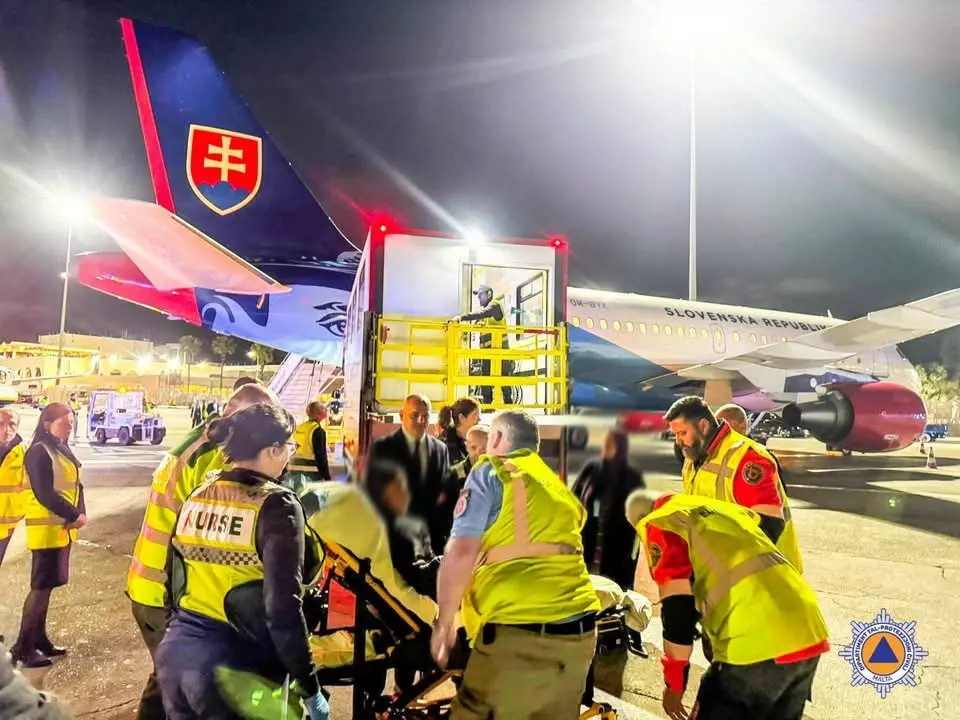
LA VALLETTA (MALTA) (ITALPRESS/MNA) – Four Palestinian children from Gaza arrived in Malta in the early hours of Thursday morning to receive medical treatment, as part of an ongoing humanitarian initiative.

Prime Minister Robert Abela confirmed the arrival and stated that Malta continues to extend humanitarian support to those in need. He welcomed the three boys and one girl, along with their accompanying relatives, who made the journey from the Middle East.

Their transfer was coordinated through the European Union Civil Protection Mechanism, with active participation from Malta’s Civil Protection Department. The operation ensured the safe passage of the children to Malta where they are expected to receive specialist care.

Medical professionals at Mater Dei Hospital will be overseeing the children’s treatment. Meanwhile, their family members are being hosted by Malta’s Agency for the Welfare of Asylum Seekers (AWAS).

Prime Minister Abela emphasized Malta’s commitment to humanitarian values, highlighting the country’s role in offering aid to vulnerable communities affected by conflict.

-Foto Protezione civile Malta-
(ITALPRESS).


Source: medNews
1 … 349 350 351 352 353 … 545