Author Archives: admin.01

Two groups of migrants in distress off the Sicilian coast

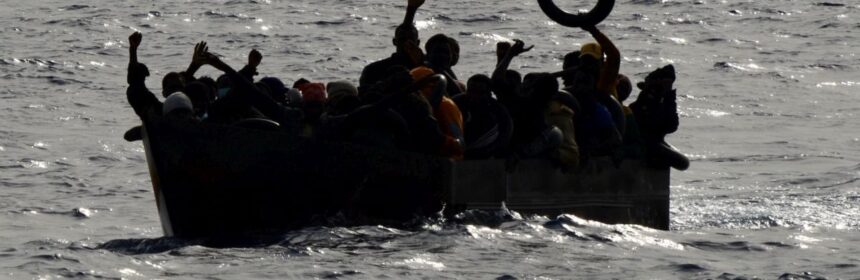
LA VALLETTA (MALTA) (ITALPRESS/MNA) – The Italian authorities were alerted by the international NGO Alarm Phone about two groups of migrants in distress off the Sicilian coast. Alarm Phone confirmed that it is in contact with a group of around 40 migrants in serious difficulties 70 miles southeast of Sicily. “They fled from Libya and there is no food and report having run out of water and food.” The NGO is hoping that the Italian coastguard acts quickly following the alert signal sent to the Italian authorities. Meanwhile, the Maritime Rescue and Coordination Centre in Rome confirmed with Alarm Phone that in the last hours it was handling another group of 70 migrants on a fiberglass boat near Sicily. The Italian authorities took the action following a no reply from the Maltese Rescue and Coordination Centre. Alarm Phone said that after three days at sea, the migrants were without food or water and their engine stopped. Meanwhile, other NGOs are involved in rescue operations in the Mediterranean. Three days ago a group of 58 migrants, including 12 unaccompanied minors, who were in distress at sea have safely disembarked in Civitavecchia following a rescue operation by the NGO SOS Humanity.

– Photo Agenzia Fotogramma –

(ITALPRESS).


Source: medNews

Continuous burning fossil fuels causing Mediterranean heatwaves

LA VALLETTA (MALTA) (ITALPRESS/MNA) – The heatwave that hit the Mediterranean in mid-July would have been “virtually impossible” without anthropogenic climate change, says a new analysis from the World Weather Attribution (WWA) network. The analysis found that the extremely hot temperatures in Greece, Italy, Spain, Portugal, France, and Morocco would have been between 2.5°C and 3.3°C cooler were humans not burning fossil fuels. While the latest report from the WWA relies on observational data, without extrapolation from climate models, it notes that the results are “very similar to the studies published in 2023 that analysed heatwaves in the same region and included climate models”. Common ground between the observed changes in July 2024 and July 2023 “are a good indicator of how climate change is affecting extreme heat in the Mediterranean,” including the reality that extreme heat events like the one just past “are no longer rare”. “Similar heatwaves affecting Greece, Italy, Spain, Portugal, and Morocco are now expected to occur on average about once every 10 years in today’s climate that has been warmed by 1.3°C due to human-induced climate change,” writes the WWA. Should humanity fail to shift “rapidly” away from fossil fuel combustion “these events will become hotter, more frequent, and longer-lasting.” And failure to prioritize heat adaptation will mean more intense suffering, and more deaths, with the most vulnerable most exposed to risk. At least 21 people were known to have died of heat-related causes in Morocco last month when temperatures breached 48?. Reporting delays and poor record-keeping in Morocco and elsewhere in the region mean that dozens or even hundreds more “likely” died from heat stress during the July heatwave, but haven’t yet been counted in the total, adds WWA. The WHO said the past two decades have seen a 30% increase in global heat-related deaths, with older adults (especially those living alone), and people with underlying health conditions at particular risk.”Temperature extremes exacerbate chronic conditions, including cardiovascular, respiratory, and cerebro-vascular diseases, mental health, and diabetes-related conditions. Extreme heat is a problem particularly for elderly people, especially those living alone. It can also place an additional burden on pregnant women,” Hans Kluge, WHO’s Europe director, said in a statement. European policymakers are beginning to pay attention, with heat action plans “increasingly being implemented across the region,” WWA says.

– Photo Agenzia Fotogramma –

(ITALPRESS).


Source: medNews

BF’s plans for Africa, Vecchioni “Value on the ground and for the community”

MILAN (ITALPRESS) – “For us, today’s Bf in Italy is also the best example to introduce ourselves to the agriculture sector in other continents. We have received several delegations from African countries in our offices in Jolanda di Savoia in Cortona and Arborea and Marrubiu in Sardegna, presenting our working methods to grow agricultural and social communities”. This was stated by Federico Vecchioni, the CEO of BF in an interview with the daily newspaper Domani.
BF started its internationalization journey in 2023, with the creation of BF International. Its plan is ambitious: investments in 40 countries worldwide, 30 of which are African, based on a vision of equal collaboration, with an average of 10 thousand hectares of cultivated area and a thirty-year vision. The first countries involved are Algeria, Egypt, and Ghana.
“Agriculture has once again become central in the economies of all countries, regardless of the GDP and the ability to generate wealth,” he explained, adding, “The emergencies of recent years, such as Covid or conflicts, have caught this world unprepared. Today everyone has understood that agriculture is essential, in terms of strategy. It is not just food, it is much more, it is conservation of natural resources, it is employment, it is technology, it is the healthiness of food and therefore the well-being of human beings”.
Federico Vecchioni remarked that as an agriculturally driven economic project, a high-tech integrated agro-industrial infrastructure like Bf would have been considered unfeasible 15 years ago. “It is from these considerations that the Africa plan was born: seeing the next 30 years as an opportunity for those who have developed our ability to manage land capital”.
“The logic according to which food commodities could only come from certain areas of the world and that other countries could therefore do without producing or doing agriculture has been exposed,” underlined Federico Vecchioni.
“When the Haiti disaster occurred in 2010, the European Union wanted to send wheat as food aid but our warehouses were empty. Today, no one can afford not to have their national supply, which is the result of a policy that links it to the growth of the agricultural sector. This is the reality for economies with high per capita income, such as the Gulf countries, as well as African countries. The events of recent years have shown that moving away from agricultural production exposed food security risks, not only on a qualitative but also quantitative level. It is therefore a geopolitical mistake and not just an economic one. There will be a rebalancing of forces in the future, and agricultural production will be more transversal and less concentrated. Countries that were net importers, such as those in North Africa, are facing the problem of having their storage and production for their growing populations, as in the case of Egypt”.
“In Africa,” added the CEO of Bf, “we do not acquire land but enhance its value. As our advisor, Bcg attests in his competitive analysis, that such a project on a global scale is not equal in the agricultural and food sector. In the world, some multinationals sell products or sovereign funds that buy land”. Federico Vecchioni remarked: “Our approach, however, is opposite to both models. We want to carry out long-term projects, leaving what we produce on the local agricultural market. Therefore, Algerian wheat will remain in Algeria, I specify this because there have been wrong or instrumental interpretations on this aspect. Algerian President Tebboune wants to bring the country to food self-sufficiency and our presence is with a view to collaboration on strategic objectives. This method is different from land grabbing simply because land is not bought,” explained Vecchioni. He emphasized: “Ownership remains within the local communities, investments remain on the ground. People are not exported. Instead, the existing human capital is valorized. Through local partners with whom we build alliances, we pay attention to the social and environmental impacts where we operate. We invest in future generations, as we are doing in Italy with young farmers”.
Regarding the choice of countries from where to start, “there are supply chains closer to us, such as large crops from cereals to legumes to animal farm management,” he declared. There is an interest that arises from the historical vocation of our research. We started from countries such as Algeria or Ghana, where relationships linked to experimentation and research or to economic relations that were not consolidated but still present were already underway. In other countries, such as Egypt, it was the Italian embassies that created opportunities at the time when Bf Spa entered the international market. Furthermore, in April we completed the acquisition of Agriconsulting Europe, which has long experience in European relations with various African countries and has made agricultural relations with economies such as those of Congo, Brazzaville, Kenya, Angola or Senegal available to us”.
“I believe it is important,” underlined the CEO of Bf, “to implement economic development projects dedicated to each country, with an innovative approach but which can be assimilated at the right time with a gradual technological transfer. The creation of a model farm for 5 to 10 thousand hectares, like the ones we are planning, will create production centers that will create righteous effects even in the current context because they interact with communities, small farmers, and artisans, bringing technological transfer, preparation, and professionalism. We will revitalize vast uncultivated territories, where it is easier to introduce new digital or regenerative agriculture technologies that are more consistent with climate change”.
“There is an interaction that I consider virtuous and complementary – he added -. The Mattei Plan is a political act of our government, with an economic and social impact. Ours is the industrial plan of a private entity that has allocated resources to implement it The political vision unites the actions in progress”.
“In countries where plans coexist, it could certainly be by the Italian system and which Bf is part of it”, he continued.
“The Bf plan envisages interventions in many countries, including those in the Mattei Plan. There has not been a joint development temporally, but there will be a joint implementation. We will make investments in countries included in the Mattei Plan and the forces in the field will be able to act in a complementary way”. Then, after Africa “there will certainly be Latin America, in particular, Brazil. Certainly, Eurasia, because countries like Uzbekistan and Kazakhstan have very interesting agricultural areas. Finally, there is the Middle East, countries where there is little land but investments in food security of 85 billion dollars”.
– photo Agenzia Fotogramma –
(ITALPRESS).


Source: medNews

Maltàs airport performed better than other airports in southern Europe

LA VALLETTA (MALTA) (ITALPRESS/MNA) – Malta International Airport had outperformed Southern European peers including Italy, Greece and Spain with 4.1 million passengers in its best-performing first half to date, a year-on-year increase of 18.4%.
March was the fastest-growing month for this period, surpassing 2023 levels by 30%, followed by February (+25%) and January (+23%).
On the back of this exceptional growth in passenger traffic, the Chief Executive Officer Alan Borg said the company reported increased income from both its aviation and non-aviation segments, with revenue for the first half of the year totalling €66.4 million and a net profit of €22.1 million.
“Following an excellent performance across all facets of our operation, we are entering the second half of 2024 in a solid financial position; one which has enabled our company to distribute its highest interim dividend to date to shareholders and continue to invest in the development of Malta International Airport,” said Borg.

– Foto: xf3/Italpress –

(ITALPRESS).


Source: medNews

Libya, cooperation on the issue of illegal migration

LA VALLETTA (MALTA) (ITALPRESS/MNA) – The Italian Consul in Benghazi, Francesco De Luigi, reaffirmed Italy’s commitment to cooperating with Libya on the issue of illegal migration.
This statement came at the conclusion of a workshop organized by the House of Representatives’ Foreign Affairs and International Cooperation Committee in collaboration with the International Organization for Migration (IOM).
The workshop, focused on the oversight role in migration management, saw participation from notable figures including the Chairman of the House of Representatives’ Foreign Affairs Committee, Youssef Al-Agouri, Committee Rapporteur Mohamed Tamer, and Italian Consul Francesco De Luigi.
Al-Agouri stressed the importance of coordinated efforts among all relevant national agencies and the need to leverage international expertise to build Libyan capacities. He expressed gratitude to the IOM for its technical support to the House of Representatives.
Francesco De Luigi highlighted Italy’s eagerness to collaborate with Libya in addressing illegal migration.
Libya has long been a critical transit point for migrants from Africa and the Middle East attempting to reach Europe. The country’s political instability and proximity to Europe have made it a hotspot for illegal migration. In recent years, Italy has been at the forefront of efforts to manage and mitigate the flow of migrants across the Mediterranean.
The collaboration between Italy and Libya on migration issues is part of broader efforts to enhance Libyàs capacity to manage migration more effectively.
Meanwhile, the Libyan police have raided an under-construction house in the eastern region of Qaryounis, Benghazi, uncovering a human trafficking operation. The raid resulted in the seizure of a significant amount of gasoline and the arrest of several migrants.
The Benghazi Security Directorate stated, “Following the instructions of Security Director General Ahmed Al-Shamikh to combat illegal activities, information was received about individuals of various nationalities gathering in an under-construction house in the Al-Teriya area, within the jurisdiction of Qaryounis Police Station. These individuals were suspected of planning to migrate to Europe via the Libyan coast.”
Based on this intelligence, the head of the Qaryounis Police Station ordered a reconnaissance team to investigate and apprehend any suspects. Upon reaching Al-Teriya and entering the house, the team discovered several illegal migrants and found 60-litre plastic jerry cans filled with gasoline. Additionally, the police seized a fishing boat and its engine. During interrogation, the migrants revealed their intention to migrate using the boat. The investigation further uncovered that a Palestinian national had orchestrated the migration and collected the payments. All involved parties have been handed over to the relevant authorities for further action.
The United Nations Office on Drugs and Crime (UNODC) called for Libya to urgently implement comprehensive policies to combat human trafficking and target smugglers. A UNODC representative advised Libya to focus on four key areas: prevention and prohibition of crime, protection of victims, prosecution of traffickers, and collaboration with various law enforcement agencies within Libya and neighboring countries.
“We will continue to provide technical assistance and support to several Libyan institutions”, the representative added, acknowledging the European Union’s backing in implementing these recommendations.
The UNODC emphasizes the importance of creating robust legal frameworks that explicitly outlaw human trafficking and smuggling. Preventive measures should include public awareness campaigns and educational programs to inform potential victims about the dangers of trafficking. Providing comprehensive support services for trafficking victims is crucial, including safe shelters, medical care, psychological support, and legal assistance to help them rebuild their lives.
Strengthening the judicial system to ensure traffickers are held accountable is vital. This involves training law enforcement and judicial officials on how to handle trafficking cases effectively and humanely. Enhanced cooperation between Libyan law enforcement agencies and their counterparts in neighboring countries is necessary to tackle trafficking networks that operate across borders. Joint operations, intelligence sharing, and coordinated strategies can significantly disrupt trafficking activities.

– Foto: Agenzia Fotogramma –

(ITALPRESS).


Source: medNews

Grillo “Malta is nothing short of any other Country”

LA VALLETTA (MALTA) (ITALPRESS/MNA) – Beppe Grillo, 21 years old architecture student and sprinter, has just represented Malta on the biggest sporting stage possible, taking on the Olympics Games first round of the 100 metres heats. Grillo participated in Heat 6 of the preliminary round and went into the round with the second-fastest time among the eight different athletes. Unfortunately, by the end of the 100-metre sprint, Grillo could only manage fifth place and therefore failed to progress any further into the competition. Grillòs greatest achievement to date has been clocking a time of 10.23 seconds in the 100 meters at the Balkan Championships, where he also secured Maltàs first bronze medal in the event. That performance earned him a spot as Maltàs wild card in the athletics category for the Olympics Games. His goal in Paris was to surpass his personal best, hoping to reach the semi-finals. In an exclusive interview with Mednews, Beppe Grillo said: “I was anticipating a lot smoother performance. It was over before I could even comprehend it. There is a lesson to be learned in participating here and the more I look forward to this sport, the more I need to mature to be ready for these kinds of competitions”. Only the two top places would have earned Grillo a place into the next round, and this was achieved by Panamàs Arturo Deliser Espinosa and Seychelles’ Dylan Sicobo, who completed the race in 10.34 and 10.51 seconds respectively. Grillo managed a 10.69 seconds, which is 0.46 seconds slower than his national record which he had set last May at the Balkan Championships. Grillo described his performance as “nothing good,” adding: “It was the second slowest time I did this year. I cannot be happy with it when you are at the Olympics which is to perform at your best, but performing consistently at a high level takes experience which I need time to build up”. The Maltese athlete said that now that the Olympics are over, nothing has changed. “They were never an end goal. I see them more as the beginning of my professional career at this level, so after enjoying my summer break, I will be back with my coach to the next cycle for training and competitions where hopefully we start quickly show our potential and talent”. Asked about his career so far, Grillo said: “In the beginning when I started athletics it was nothing really serious, but now in such a short time I realize how far I can go. I want to be able to show that we are nothing short of any other country”.
– Foto Ipa Agency –
(ITALPRESS).


Source: medNews

Activists urge governments not to refuel tankers for Israel’s offensive

LA VALLETTA (MALTA) (MNA/ITALPRESS) – Maltàs Transport Minister Chris Bonett confirmed that two fuel tankers believed to be delivering jet fuel to Israel on behalf of the US government have not made an official request to dock in Malta for refuelling.
It is believed the two tankers are on route to Israel to deliver fuel for its ongoing offensive in Gaza, which began in October after Hamas terrorists launched a surprise attack, killing more than 1,200 people.
Moviment Graffitti, a left-wing Maltese organisation said they were still waiting for a response to their demand that both tankers be prohibited from entering, passing through, bunkering, receiving services, and docking in Malta. They argued that delivering the cargo would contribute to further violence against Palestinians.
Moviment Graffittìs statement came a day after it urged the government to deny passage and refuelling services to the tankers Overseas Santorini and Overseas Suncoast as part of the group’s ‘No Harbour for Genocidè campaign.
According to Palestinian health authorities, more than 39,000 people, mostly civilians, have been killed in Gaza since the start of Israel’s offensive in the region.
Meanwhile, Italian activists in Sicily have alerted port authorities across the Mediterranean about the Overseas Santorini deactivating its Automatic Identification System (AIS), which allows the location of the vessel to be monitored.
Palestina Libera and In Palestina warned that deactivating the tracking system poses a significant danger to navigation, particularly in the busy waters of southern Sicily.
– photo Ipa –
(ITALPRESS).


Source: medNews

Fezzan movement to Italpress, El Sharara field closed in Libya

ROME (ITALPRESS) – A group of men closed the El Sharara oil field in southwestern Libya during the night. This was announced to Italpress by Bashir Al-Sheikh, head of the Fezzan Movement. “A group that has not yet announced itself” closed the oil field after receiving the order to close the field. It is an important field for Libya whose production reaches 350,000 barrels per day.
It is not the first time that the field has been closed, as groups of protesters closed the El Sharara field earlier this year, demanding the improvement of their living conditions, the construction of a refinery in the south, the maintenance of crumbling roads and an end to fuel shortages in southern Libya, before resuming production two weeks later on 21 January.
According to Al-Sheikh, however, this time it was not his movement that was behind the closure of the site but Saddam Haftar, son of General Khalifa Haftar, who gave instructions by phone to close the Sharara camp because it was managed by Spanish oil company “Repsol”. “Saddam gave immediate instructions by telephone and without the use of military force to shut down the site in response to the attempt to arrest him last Friday in Italy, on the basis of an arrest warrant issued against him in Spain. None of our militants have participated in the closure of the El Sharara field, managed by the Spanish company Repsol, and no one can talk about it. I have nothing to do with the closure of the field and I refuse to be accused of this.”
According to this source, Saddam Haftar was in Rome last Friday and upon his return to Benghazi he was stopped for an hour by the Italian authorities as an arrest warrant from the Spanish authorities was issued against him. Saddam Haftar would therefore have been informed of the arrest warrant issued against him during his return to Libya from the Italian capital. The warrant is said to be in light of his involvement in the smuggling of a shipment of weapons blocked by Spanish police several months ago. The same sources stated that Western and Libyan attempts are underway to pressure Spain to revoke the arrest warrant issued against Saddam, with the aim of resuming work in the Sharara oil field, which is one of the most important oil fields in Libya. This was also confirmed to Italpress from journalistic sources in Tripoli and Benghazi even if at the moment there is no official confirmation from Haftar’s General Command based in Rajma.
Last summer, Saddam Haftar threatened to close the El Sharara site after Spanish police confiscated military equipment and weapons that were headed to the Emirates and then toeastern Libya, according to Spanish press reports. At the time, Saddam Haftar had managed to obtain licenses to transport goods and commercial material from Spain to the Emirates, but the Spanish police discovered that the cargo consisted of weapons and military equipment.
– Photo: Fezzan movement, Bashir Al-Sheikh –
(ITALPRESS).


Source: medNews

Malta, a large-scale fraud involving the issuance of 18,000 ID cards revealed

LA VALLETTA (ITALPRESS/MNA) – The Maltese authorities are investigating a large-scale fraud operation involving the issuance of around 18,000 Maltese ID cards to foreign nationals, including Libyans and Egyptians, based on fake documents and false declarations.
Former Nationalist MP and lawyer Jason Azzopardi filed an urgent request for a judicial investigation.
These cards were issued in less than 30 days, far quicker than the usual three to four months.
The fraud involved thousands of fake certificates, mostly marriage certificates, documenting fictitious marriages between nationals from countries like Libya and Egypt, and British citizens when the UK was still an EU member. These forged documents were then used to apply for Maltese ID cards.
– photo Agenzia Fotogramma-
(ITALPRESS)


Source: medNews

Malta the first EU country to transpose the anti-SLAPP directive into law

LA VALLETTA (MALTA) (ITALPRESS/MNA) – Malta has become the first EU country to transpose the European Union’s anti-SLAPP (Strategic Lawsuits Against Public Participation) directive into national law. The legislation, aimed at protecting journalists and public participants from abusive lawsuits, was announced by Justice Minister Jonathan Attard, just days after Ireland published its own comprehensive anti-SLAPP law. Minister for Justice Jonathan Attard announced the publication of the order transposing the Directive on protecting persons who engage in public participation from manifestly unfounded claims or abusive court proceedings under the European Union Act, Chapter 460, commonly known as the anti-SLAPP directive. Strategic Lawsuit Against Public Participation (SLAPP suit) are lawsuits brought by individuals and entities to dissuade their critics. This order, the government said in a statement, will introduce various remedies and safeguards and will apply to matters of a civil or commercial nature with cross-border implications brought in civil proceedings, including procedures for interim and precautionary measures and counterclaims, irrespective of the nature of the competent court or tribunal. Orders establish that abusive court proceedings against public participation means court proceedings which are not brought to genuinely assert or exercise a right, but have as their main purpose the prevention, restriction or penalisation of public participation, frequently exploiting an imbalance of power between the parties, and which pursue unfounded claims.
The main safeguards and remedies that will be introduced through the transposition of the directive, the government said, are: security for the estimated costs of the proceedings; early dismissal of the case if the court is convinced that the claim is manifestly unfounded; in cases where the Court declares the proceedings abusive against public participation, it may proceed to order the plaintiff to pay the defendant all legal costs of the case. The court may also impose a dissuasive penalty on the plaintiff of up to €10,000. The order also establishes that any person who is faced with proceedings to which this order applies, shall be eligible for legal aid as provided in the Code of Organisation and Civil Procedure. Minister Attard said this directive followed a number of discussions at European level where the Maltese government was active in contributing to various meetings, including the Council of Ministers.
The Minister for Justice explained that now that Malta is the first country to transpose the directive, it will ensure that it participates and assists other countries, as well as the next step now is to launch the public consultation on the report of the media Expert Committee to further strengthen the framework to protect media freedom and journalism. While the government hails this as a significant step forward in safeguarding press freedom, the Opposition and media watchdogs argue that Malta has merely implemented the bare minimum required by the EU directive, missing an opportunity for more sweeping reforms.
The Institute of Maltese Journalists (IGM) expressed satisfaction with the order but indicated it would study the legislation in more detail to recommend further improvements. It also called for constitutional reforms, changes in the law of defamation and in the Criminal Code, “with the aim of creating an environment where journalists can work with more peace of mind.” Changes are also needed in the Freedom of Information Act so that it really serves as a tool for more transparency, the institute said. The IGM also voiced disappointment that the government has yet to publish a White Paper on broader media reforms, as promised nine months ago. The Nationalist Opposition was more critical, arguing that the government implemented the directive reluctantly, and in a rushed manner, and only because it was mandated by the EU. “If it really wanted to protect journalists, the Government would have taken this step much earlier and would have implemented more recommendations that it left on the shelf for three whole years.”Adding to the controversy, the PN highlighted that the Legal Notice seems to be in conflict with several other existing laws and claimed that the timing and manner of the directivès implementation are strategic, aiming to minimise public and parliamentary scrutiny at the height of summer.

– Photo Agenzia Fotogramma –

(ITALPRESS).


Source: medNews

1 … 396 397 398 399 400 … 565